Explore the magic of Alaró.
A charming village right in front of the Tramuntana — and right in front of your door.
A brief history of Alaró
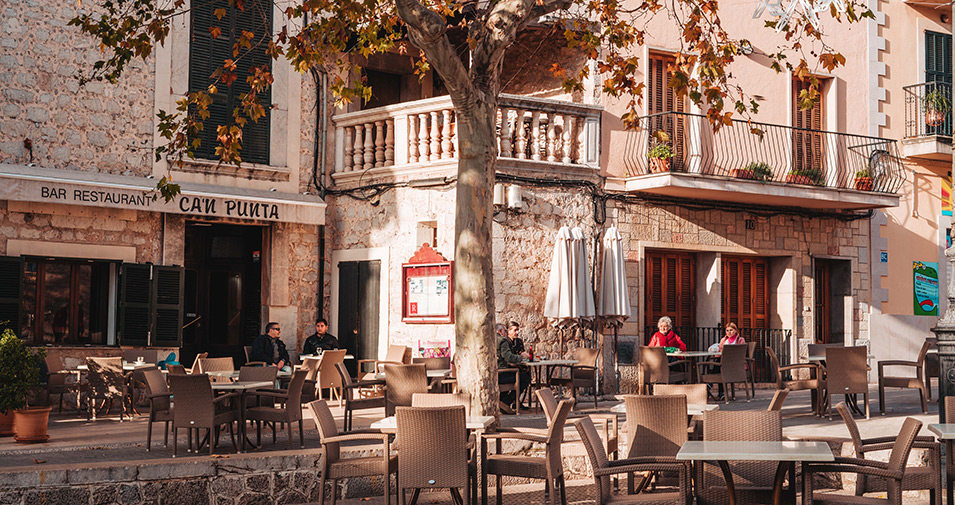
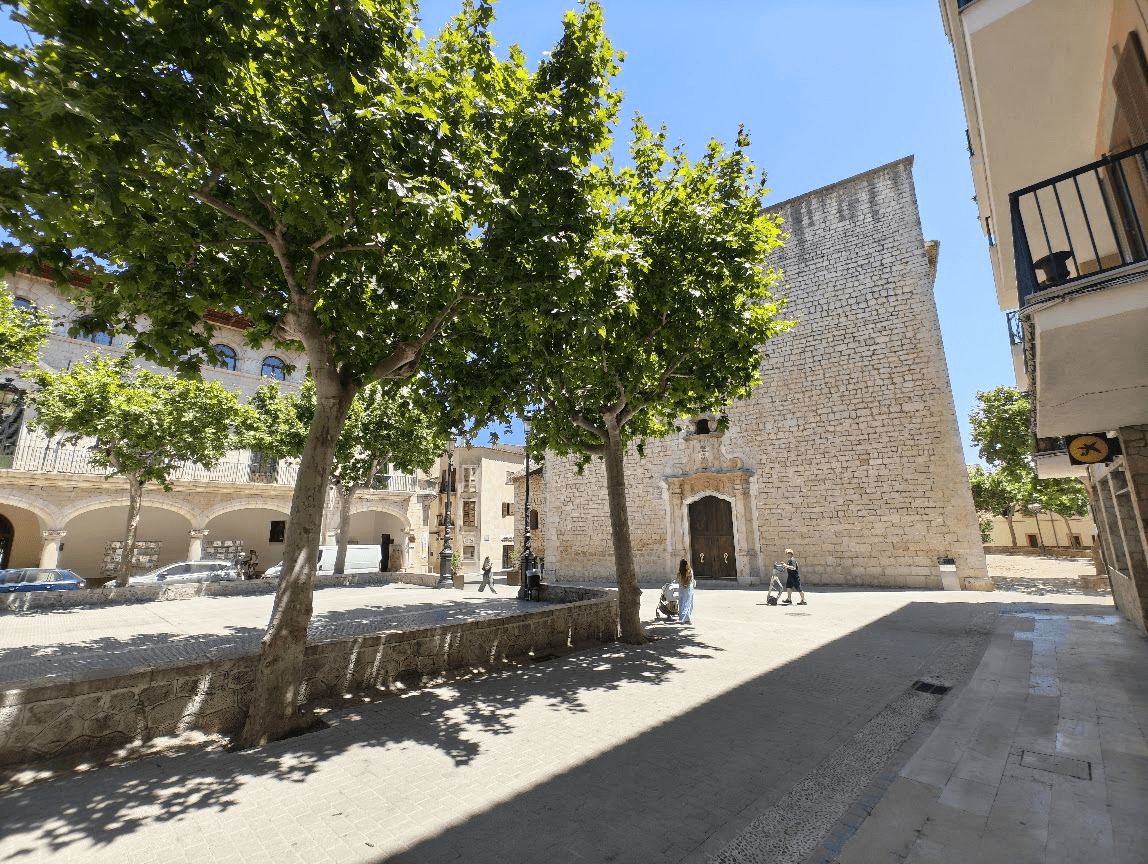
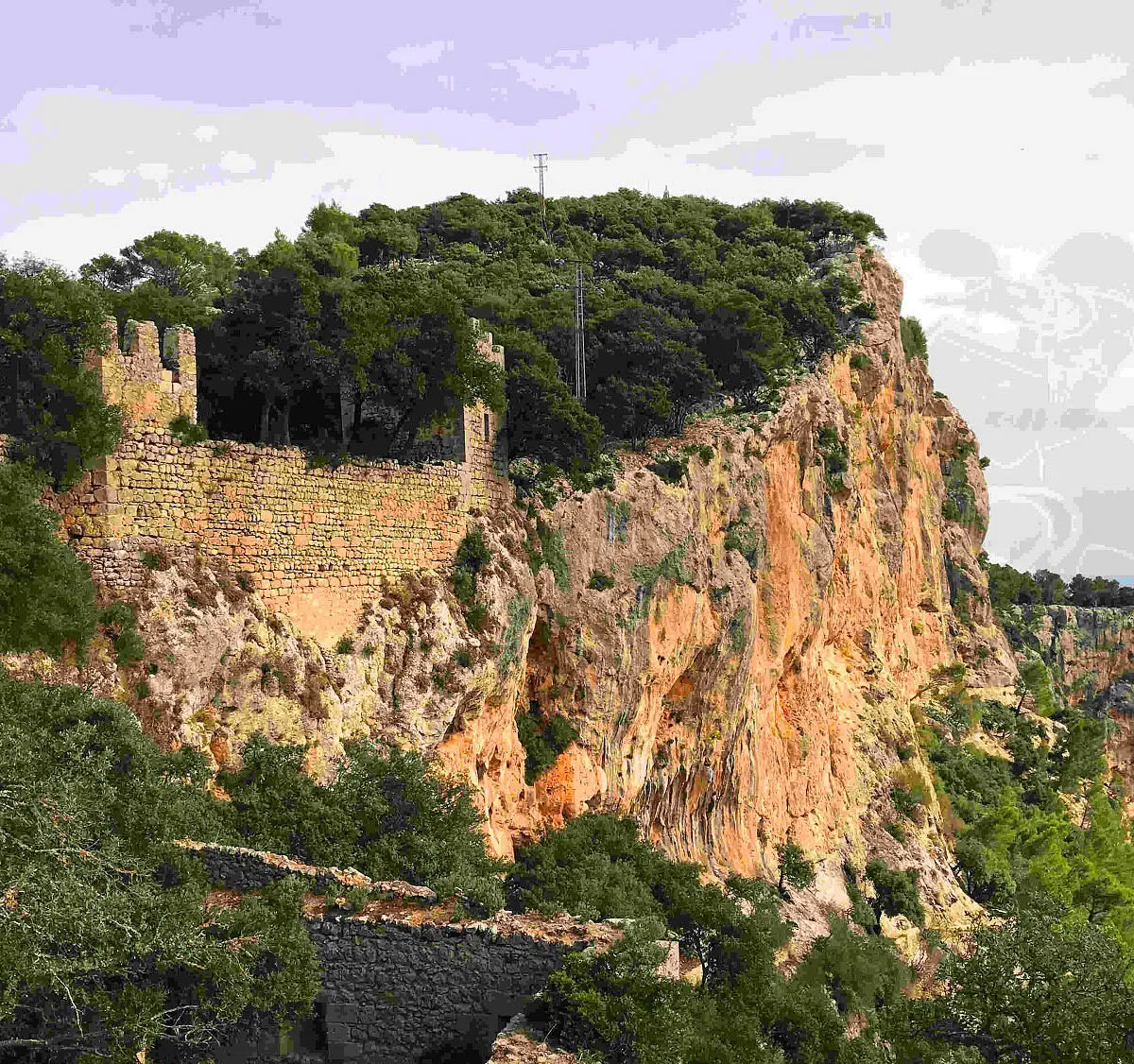
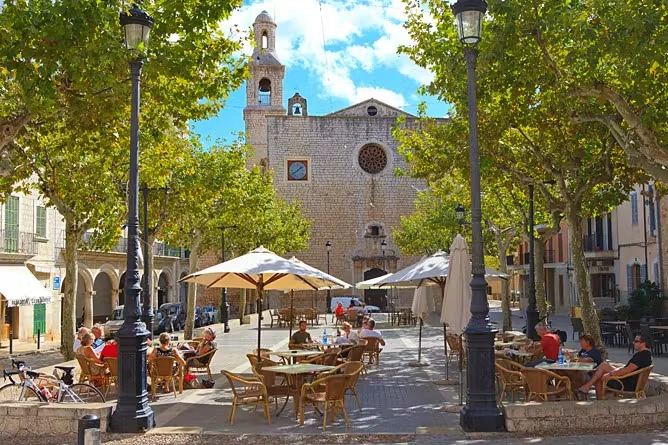
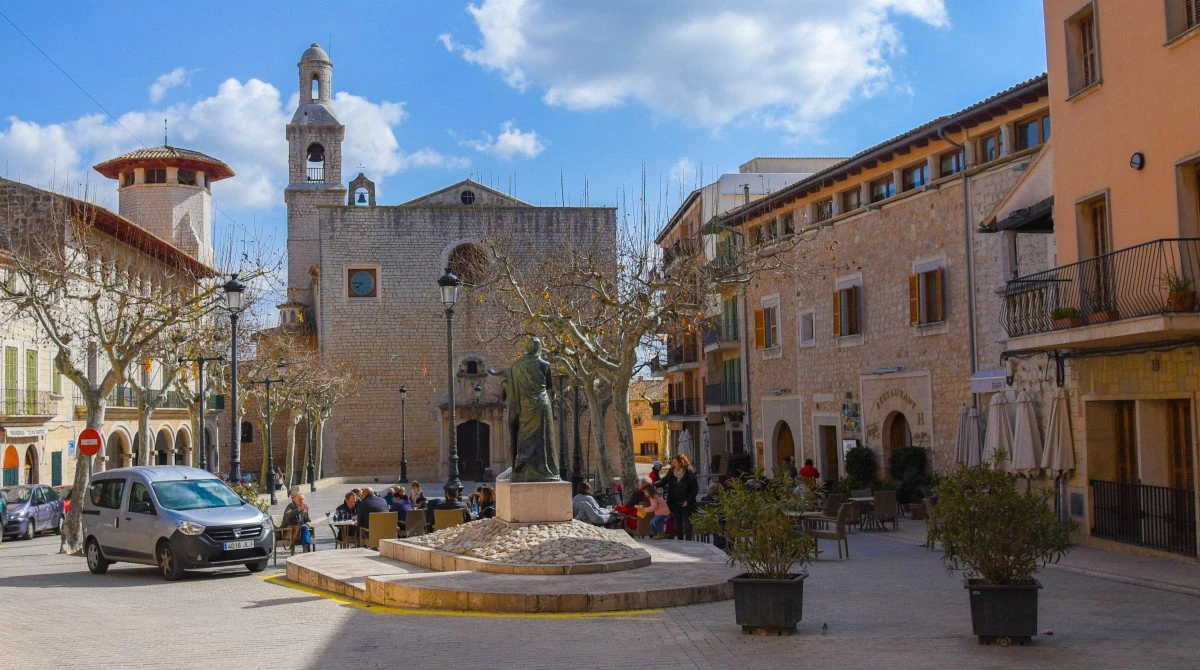
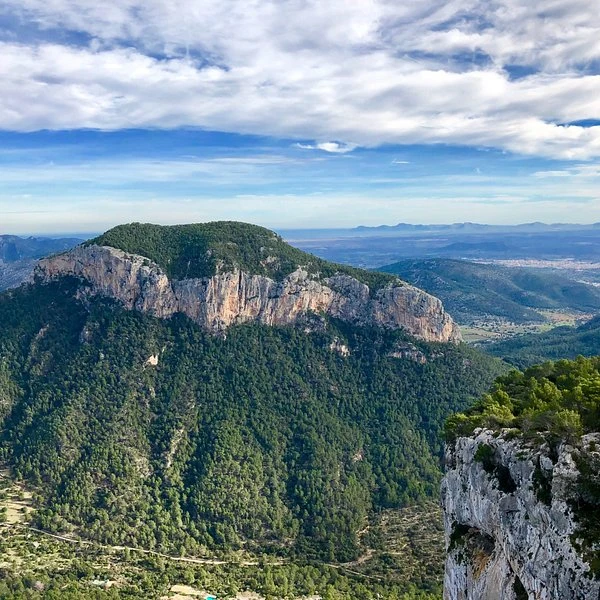
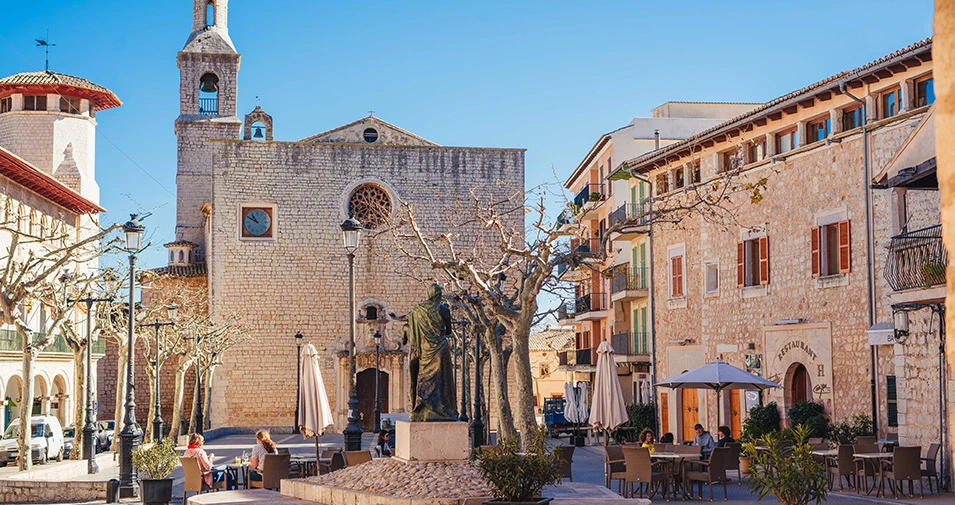
Alaró sits in a quiet valley on the southern slopes of the Serra de Tramuntana. It’s a working town rather than a tourist one with cobbled streets, honey-coloured stone, and a main square where the weekly farmers market has the square gathering on Saturday mornings.Its orgins trace back Islamic farmstead called Oloron, through Catalan conquest and a century as the island’s shoemaking centre, and the trade still lives on in a handful of workshops. Above the village, the ruins of Castell d’Alaró look out across the countryside to the bay of Palma.
Our Alaro
Stay in the village and experience one of a kind places right at your doorstep.
Restaurants & Bars
-
Es Verger
One wood oven, alight since dawn, and shoulder of lamb that has been in it for hours. Plain tables, goats, the whole Tramuntana in front of you. The access is single-track, unguarded and rough, damages low cars.
-
Bar Sa Plaça
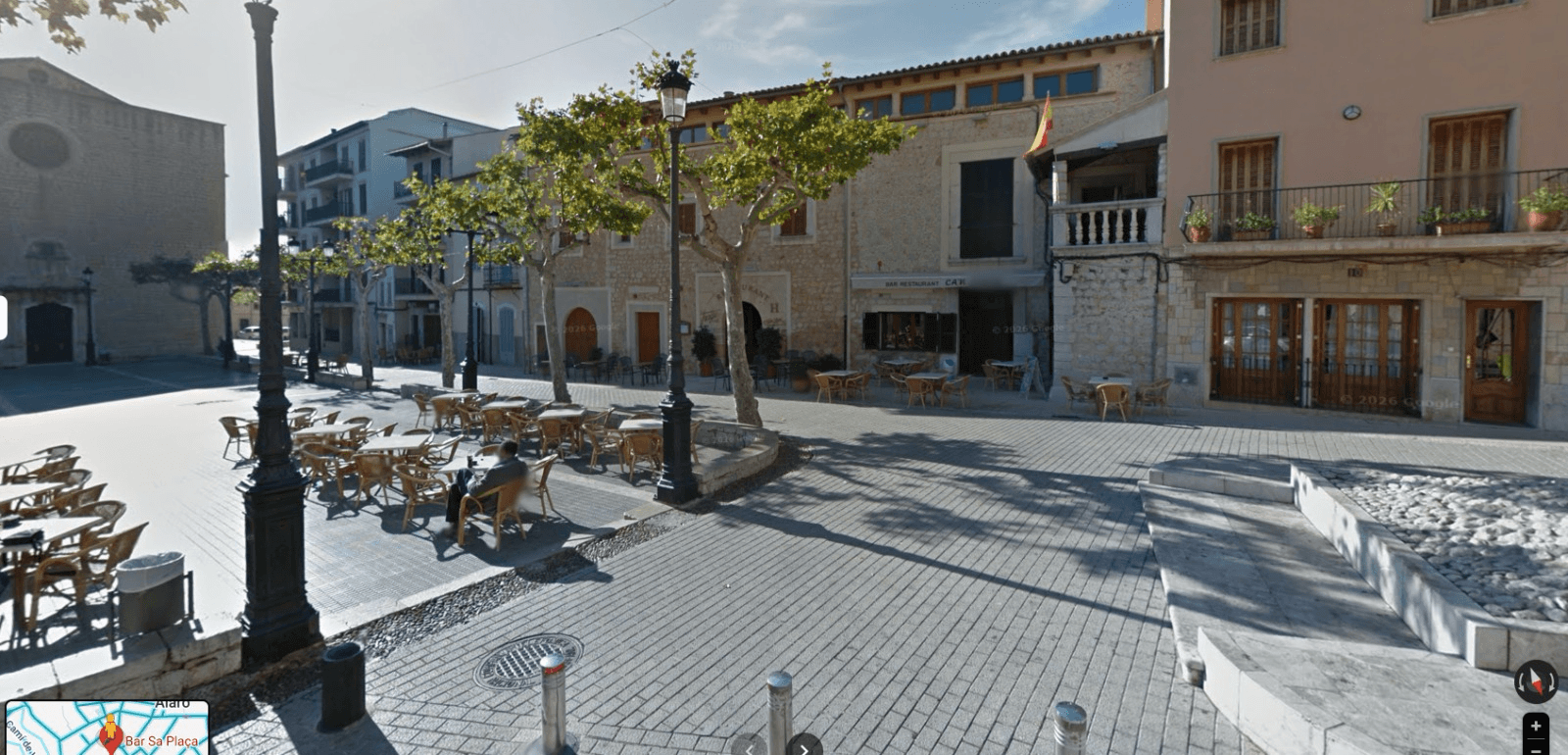
The proper village café from half past six in the morning — pa amb oli, tapas, a shaded terrace and the cycling crowd. Beside the church rather than on the main square.
-
La Isla del Gelato
Artisan gelato, crêpes and good coffee, open until midnight.
-
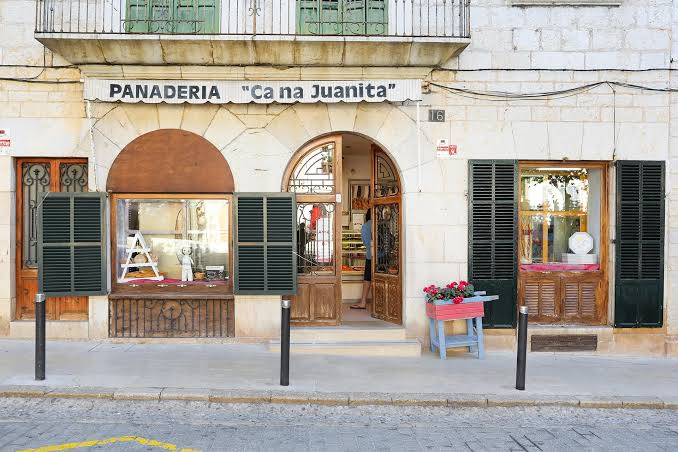
Ca Na Juanita
The bakery, for the morning ensaïmada.
-
Forastera
A working microbrewery with a taproom. Closes for holidays roughly 8.23 to 9.15 .
-
La Bufala
Neapolitan wood-fired pizza and handmade pasta, big terrace, good with children. Dinner only.
ACTIVITIES
-
Castell d’Alaró
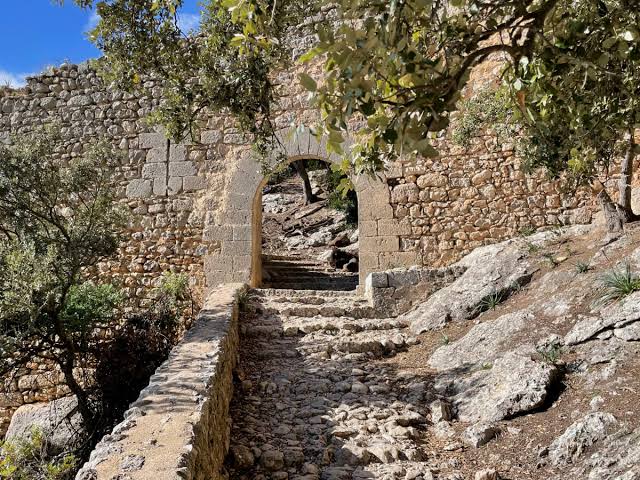
The Consell’s official circular from Plaça de la Vila: 14.15 km, 643 m of ascent, four hours fifty, graded difficult. Not for under-sixes. Up through olive terraces into holm oak, past a charcoal clearing, then hand-laid cobbles to a stone arch that is the only way in. A fortress has stood on this crag since 902, and it held out for two years after Jaume I took the island.
-
First electric light in Mallorca
On 15 August 1901, for the patronal fiestas, the brothers Gaspar and Josep Perelló Pol switched on a generating station they had built with their own money, fired by lignite from the Alaró mines, and lit the village — before Palma. Crowds came out from the city to look at it. The power station tower still stands at Avinguda Constitució 7, just 3 minutes from your door.
-
Saturday market, Plaça de la Vila
Right out the front door, runs from eight until two. Thirty stalls, produce, plants and Mallorcan crafts. Small, entirely local, no coaches.
-
Consell on a Sunday
8 min — The island’s biggest flea market. Consell also holds a general market on Thursdays.
Around the Island
The places most people come to the island for, with the approximate drive time from the front door so you can plan the day.
-
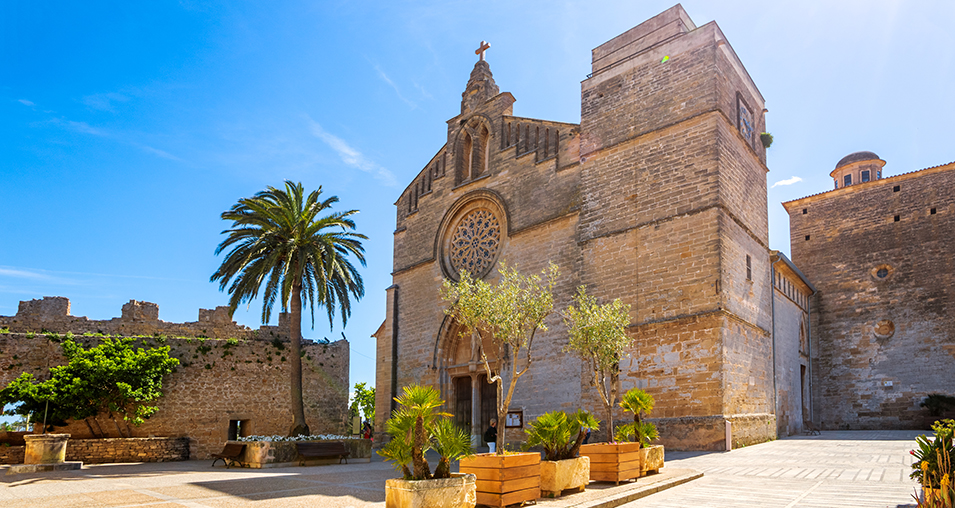
Alcúdia, and the bay
Complete medieval walls you can walk the whole way round, the Roman city of Pollentia founded in 123 BC, and ten kilometres of shallow sand behind it. Park outside the walls. Add S’Albufera, the wetland reserve — free, a permit issued at the gate, and best at first light.
-
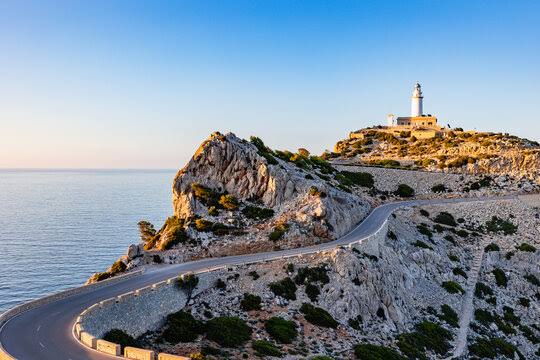
Cap de Formentor
The last headland: the Es Colomer viewpoint, a pine-shaded beach, and a lighthouse on a road cut into the cliff in 1863. Please check private car restrictions.
-
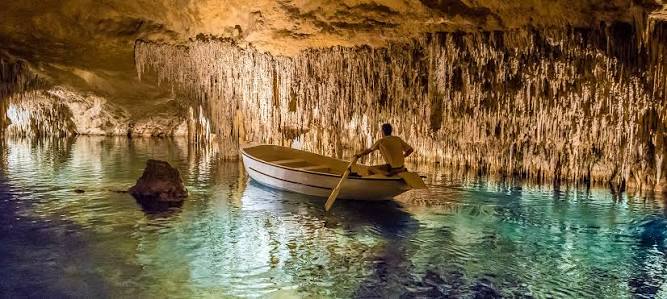
Caves of Drach, Porto Cristo
Twelve hundred metres of chambers, one of the largest underground lakes in the world, and a live string quartet playing from illuminated rowing boats. The reliable rainy day and the one children talk about afterwards.
-
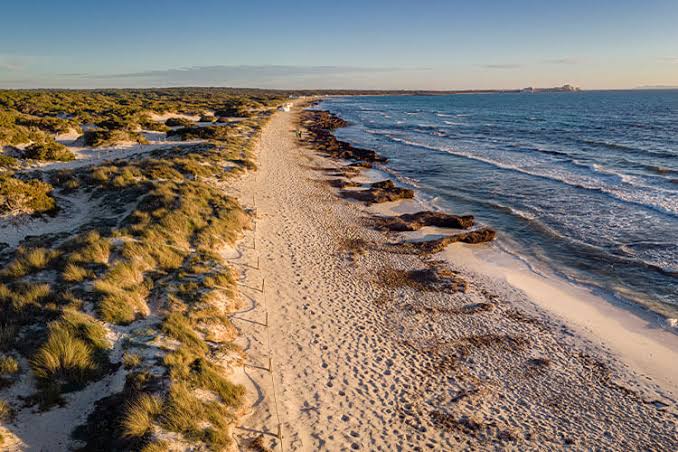
Es Trenc and the south
Three kilometres of white sand and shallow turquoise water with no hotel behind it, protected as a natural park. No natural shade whatsoever. Be parked by half nine in July and August — the approach road closes when the car parks fill, and there are occupancy sensors on it.
-
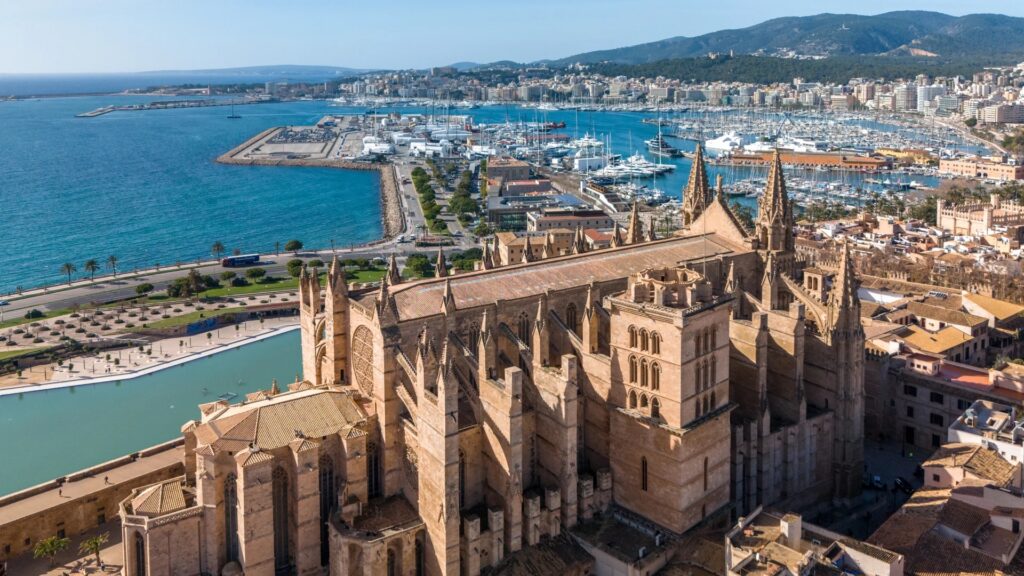
Palma and the Cathedral
La Seu has the widest Gothic nave in Europe, a Gaudí baldachin, and Miquel Barceló’s ceramic chapel. Closed to visitors on Sundays. Be there at ten; park underground at Parc de la Mar and walk everywhere.
-
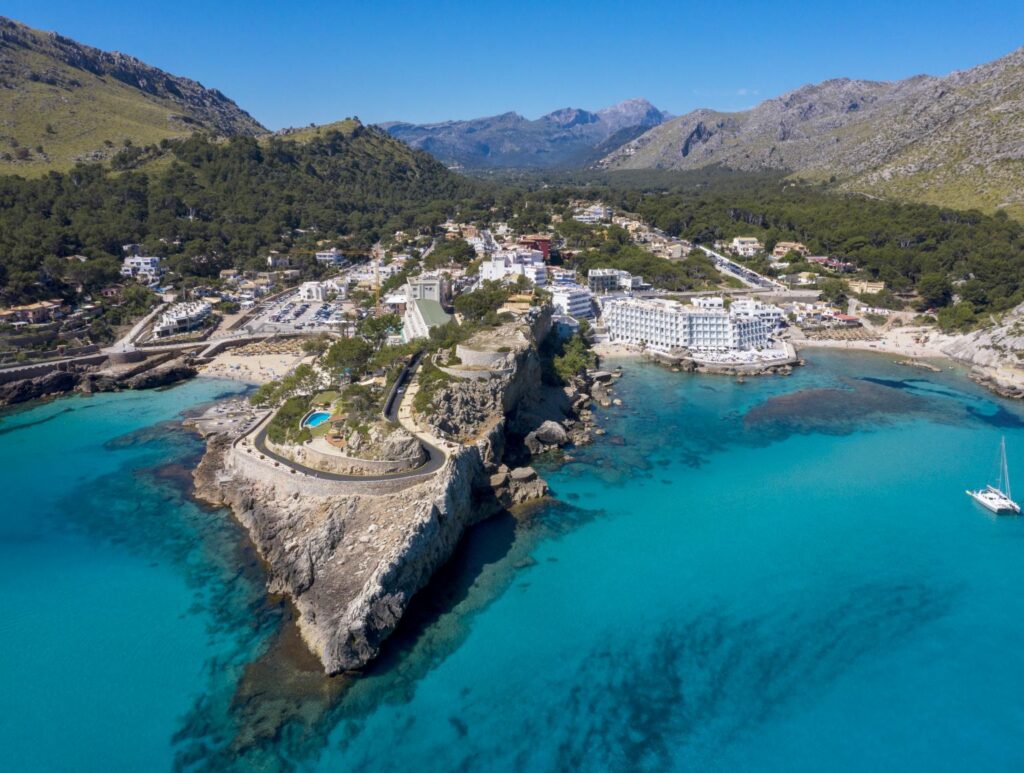
Pollença and Cala Sant Vicenç
The best-kept old town in the north, 365 cypress-lined steps up to the Calvari chapel, and four coves under a cliff a quarter of an hour away. Steps at eight in the morning or in the last hour of light — there is no shade on them. Sunday is market day: park at the Pont Romà and walk in.
-
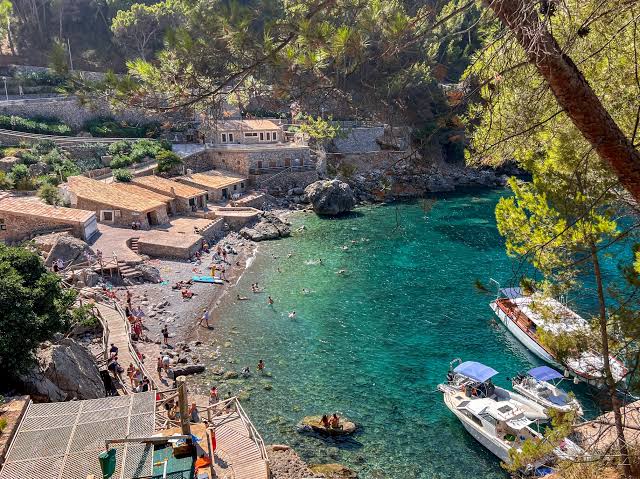
Sa Calobra and the Torrent de Pareis
Twelve kilometres of hairpins including a 270-degree spiral that crosses under itself, down to a gorge mouth two hundred metres deep.
-
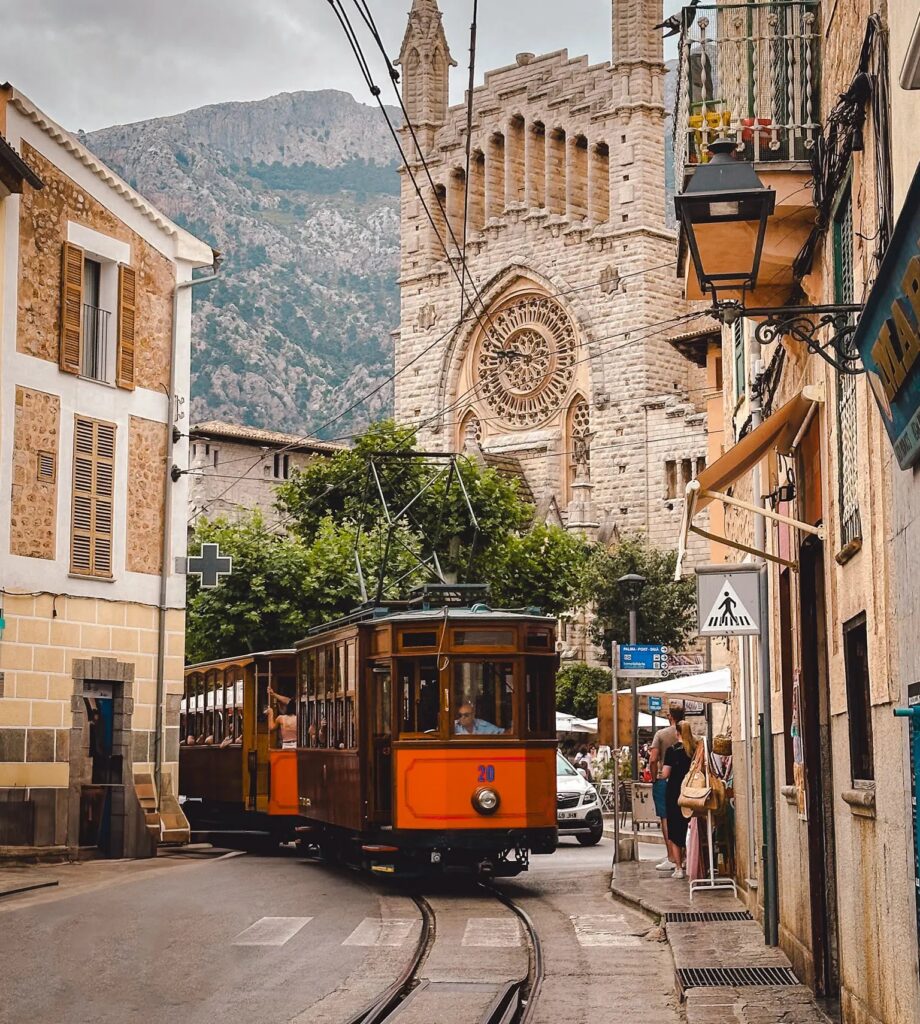
Sóller and the port, by train and tram
The 1912 narrow-gauge line climbs through thirteen tunnels into the orange valley; the 1913 open-sided tram runs down to the bay. Sóller old town now has a low-emission zone — park outside it.
-
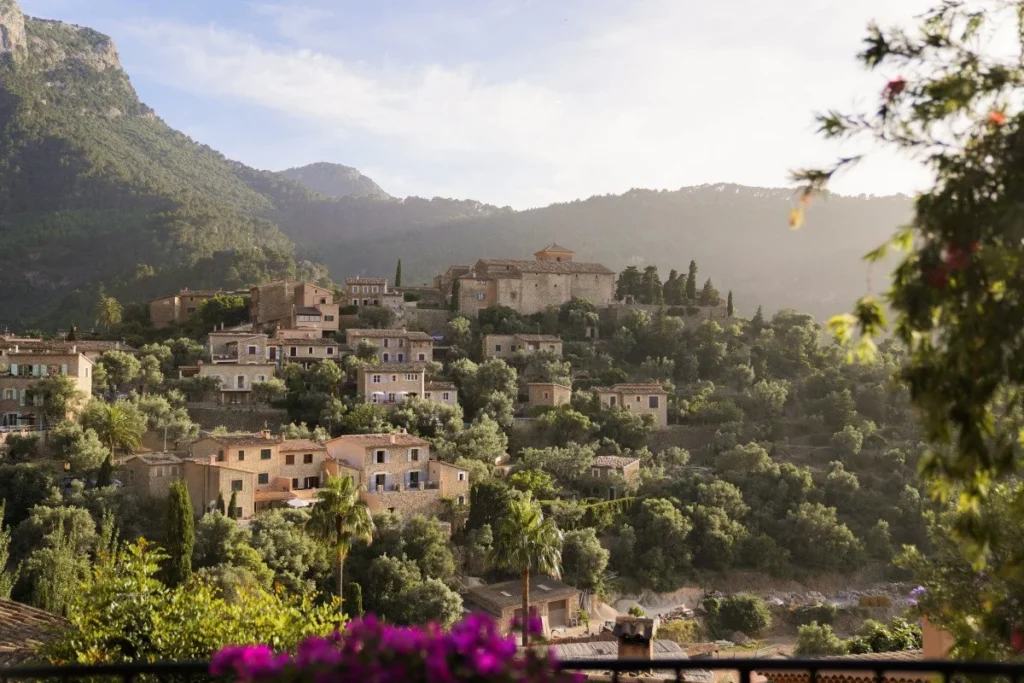
Valldemossa and Deià
Chopin’s miserable winter of 1838 in a Carthusian cell, and then the prettiest twenty kilometres of road in Spain. Then push on to Deià and Son Marroig for the half-past-three opening, when the sun is low on Sa Foradada.
-
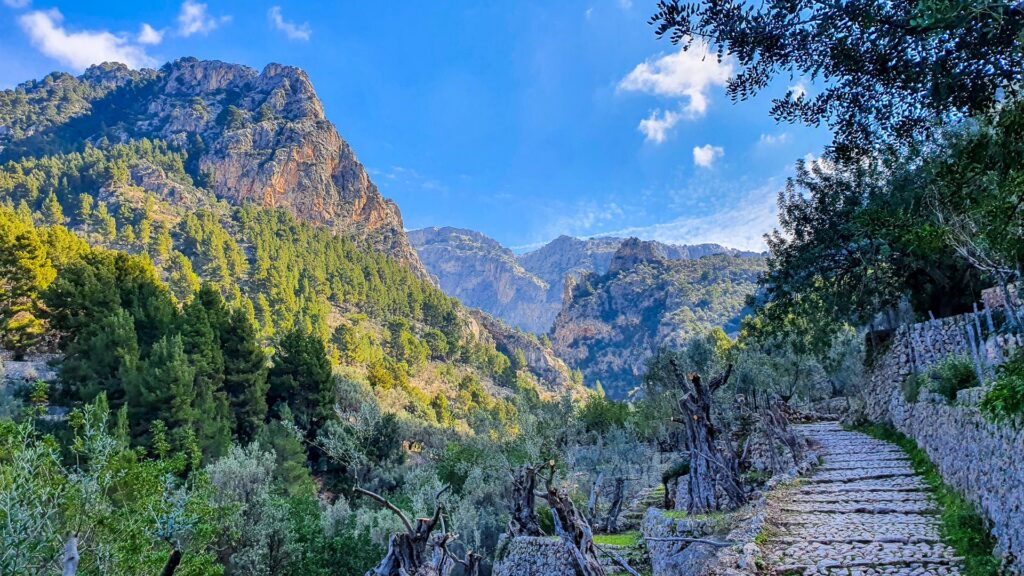
Barranc de Biniaraix
11.8 km, 1,150 m, five hours. The great stone staircase of the Tramuntana, cobbled almost throughout, crossing the torrent on a plank bridge. Punishing on the descent — poles matter. Turning back at the top of the gorge makes a far gentler half day.
-
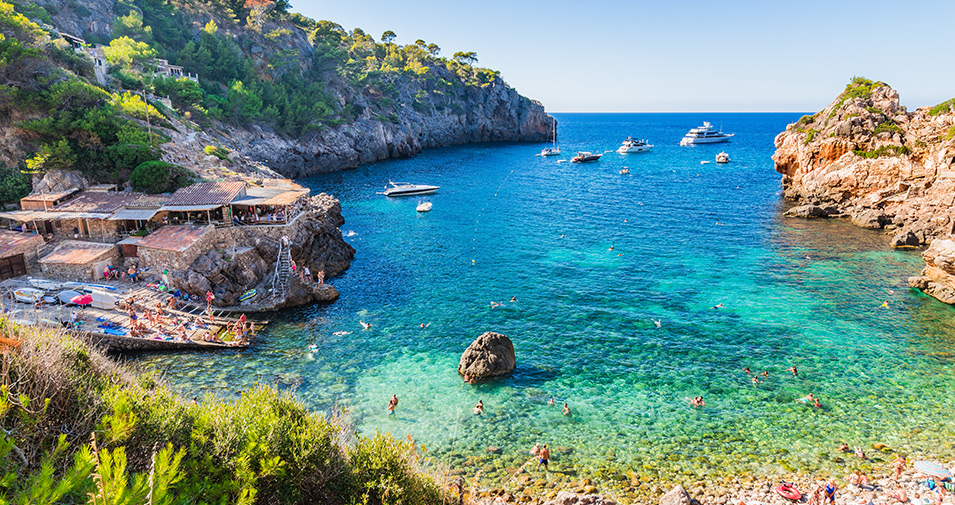
Cala Deià
4.7 km, about two hours, down to a shingle cove with two seasonal restaurants. Parking is difficult.
-
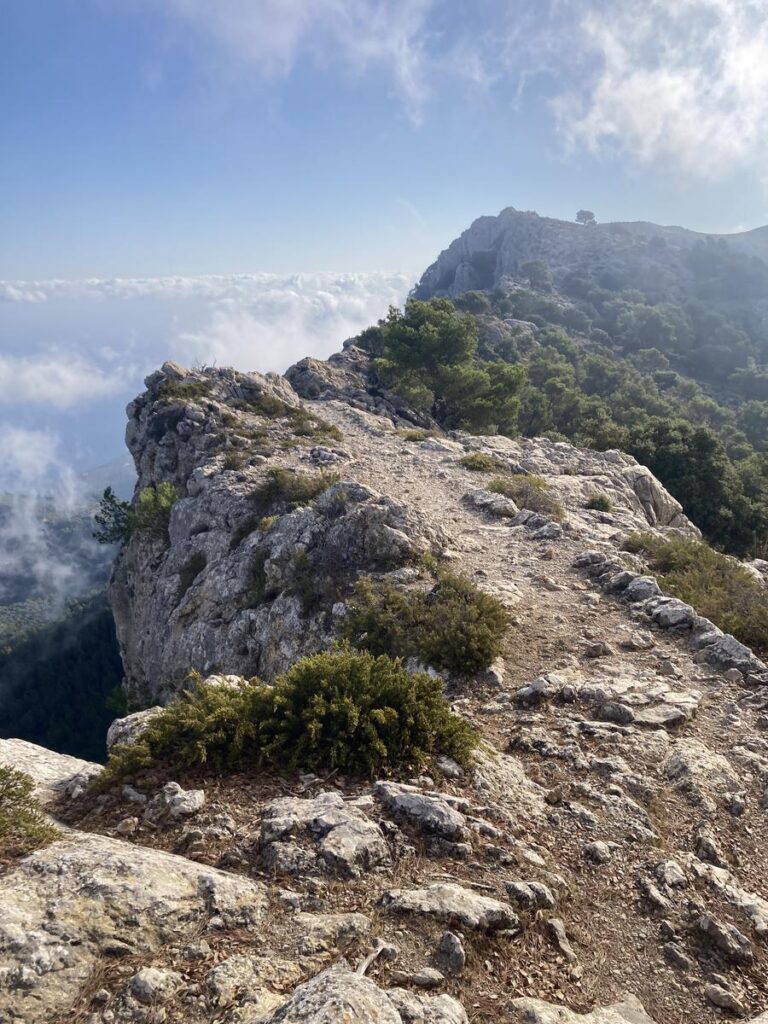
Camí de s’Arxiduc, Valldemossa
14 km, 695 m, four and a half hours. The island’s most famous ridge walk.
-
Castell d’Alaró,
From the Front Door— The Consell’s official circular from Plaça de la Vila: 14.15 km, 643 m of ascent, four hours fifty, graded difficult. Not for under-sixes. Up through olive terraces into holm oak, past a charcoal clearing, then hand-laid cobbles to a stone arch that is the only way in. A fortress has stood on this crag since 902, and it held out for two years after Jaume I took the island. The Short Way: Drive 12–15 min to Es Verger — From the upper car park it is under 5 km round trip, 250 m of ascent, about two hours — or forty-nine minutes from Pla des Pouet if you drive to the top of the track. The refuge at the summit is open nine in the morning until eleven at night for coffee, cake and sandwiches; hot meals need three days’ notice and there are thirty beds. From the Orient: 15–20 min — Eight kilometres, 500 m, three to four hours, and the more interesting ascent. Street parking only on the Ma-2100 and very little of it. The Pas de s’Escaleta is a stone stair on a ledge — slippery when wet, and hands are needed in a place or two.
-
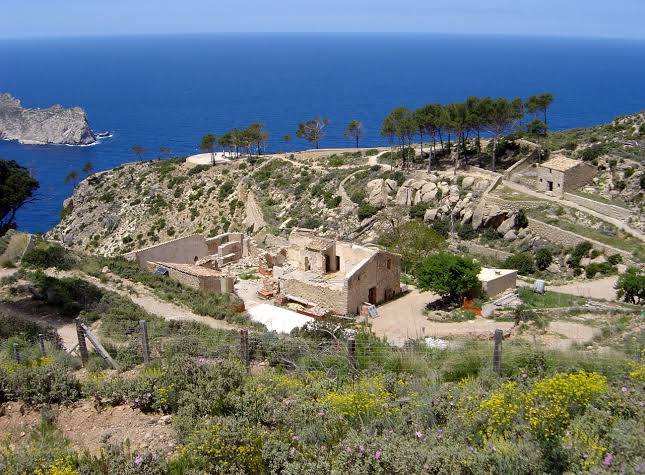
La Trapa from Sant Elm
9.17 km, 365 m, two and a half hours. Active hunting country in season; stay on the path.
-
Puig de l’Ofre
Cúber, 11.5 km, 430 m, four hours. Private hunting land, unmarked cairned sections, free-roaming donkeys.
-
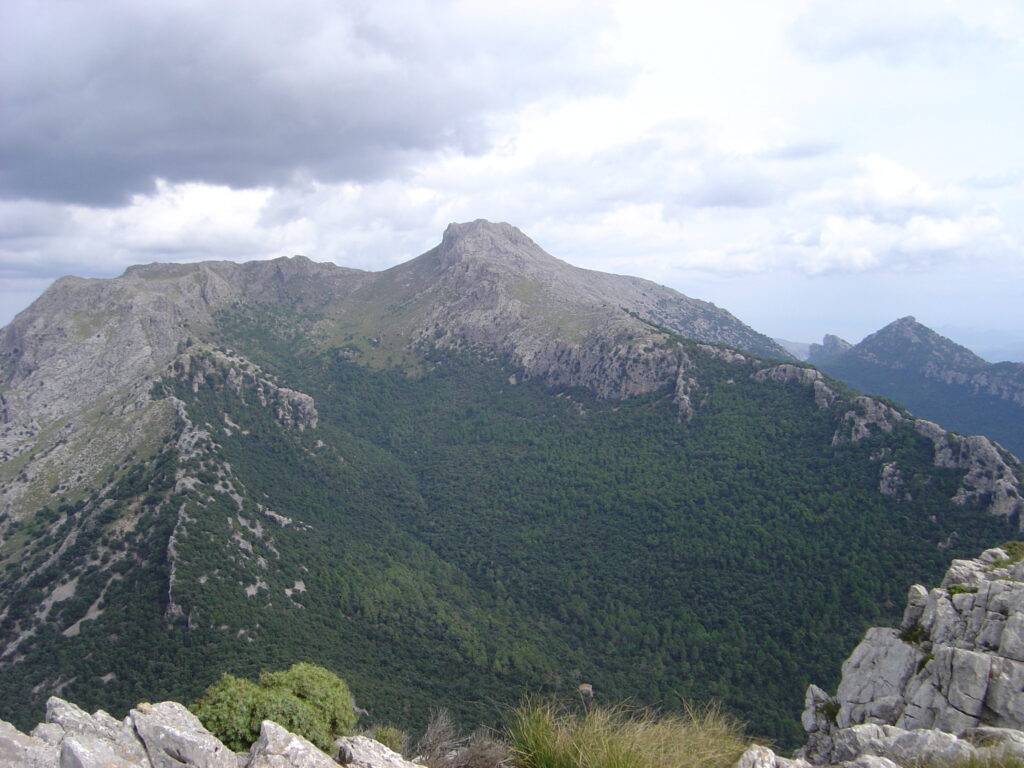
Puig de Massanella
12–13 km, 805–990 m, five to seven hours: the highest walkable peak. Private land: a fee is payable at the Comafreda gate and the route is not signposted. Escorca’s own advice is not to go in bad weather and never alone.
-
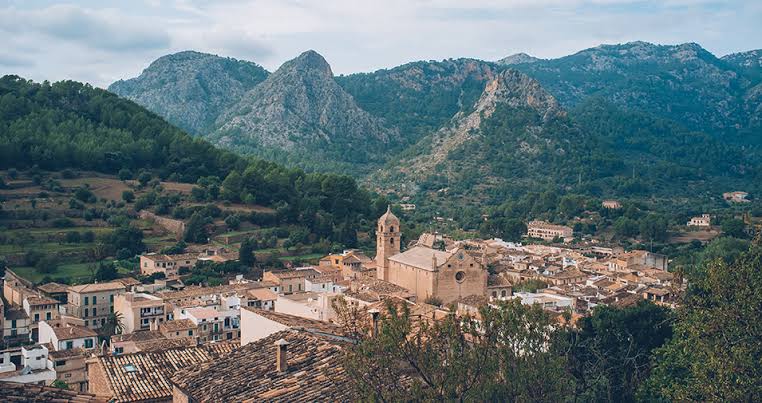
The local classic, from the door
35 km, 631 m — Alaró to Bunyola, over the Coll d’Honor, down into Orient and home. Fifteen flat kilometres, a six-kilometre climb, then a long sweeping run back. Coffee at S’Economat in Bunyola and Es Freu in Orient.
-
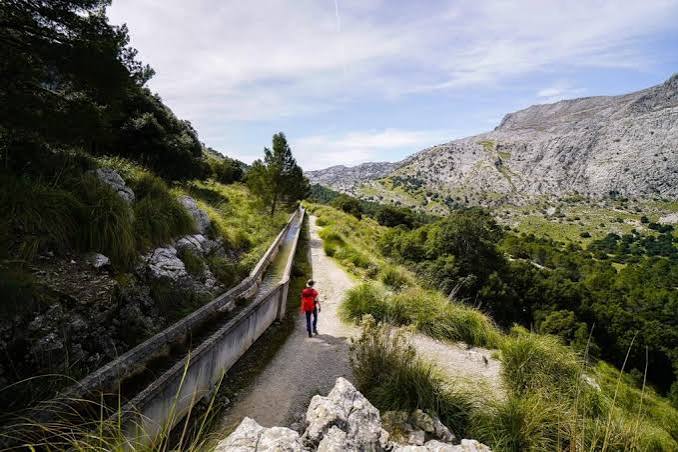
Tossals Verds circuit
Cúber – 11.4 km, 511 m, four and a half hours. The refuge does lunch from half past one, cash only. The Pas Llis is a cable-secured slab.
-
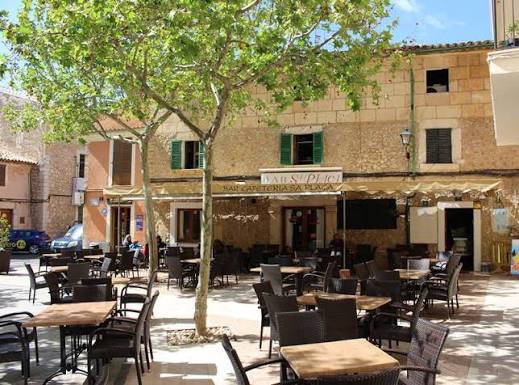
Bar Sa Plaça
On foot — The proper village café from half past six in the morning: pa amb oli, tapas, a shaded terrace and the cycling crowd. Beside the church rather than on the main square.
-
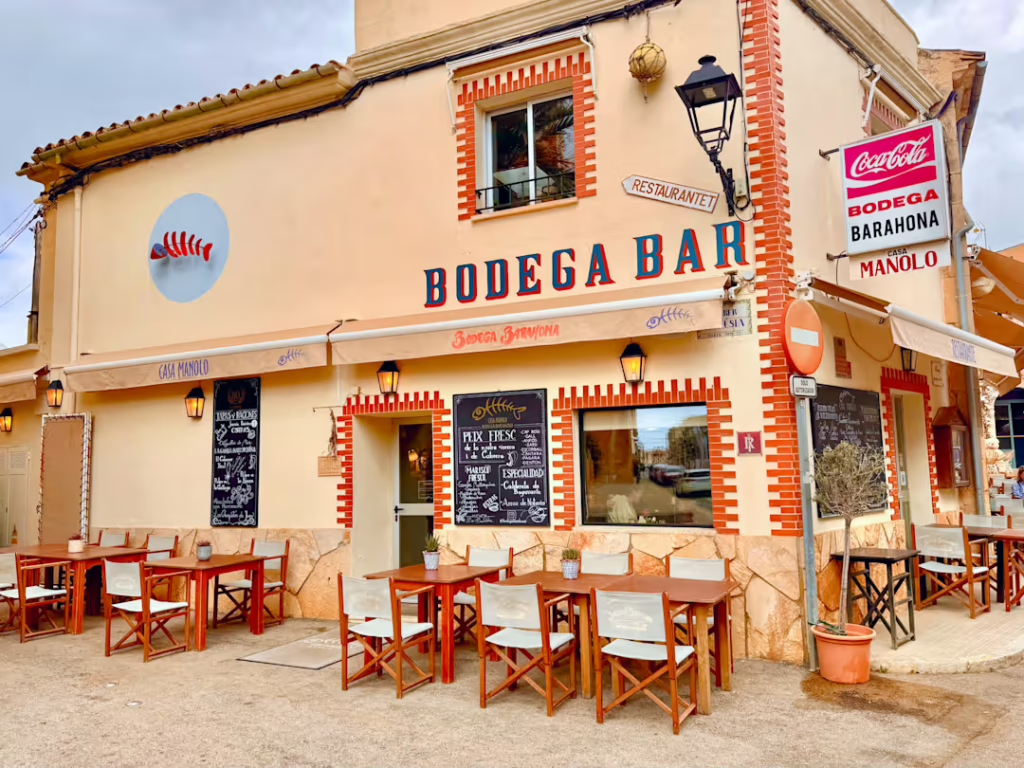
Bodega Barahona — Casa Manolo
Ses Salines, A family bodega on the village square, walls of old photographs, and arròs de notari, which must be ordered twenty-four hours ahead. Closed Mondays.
-
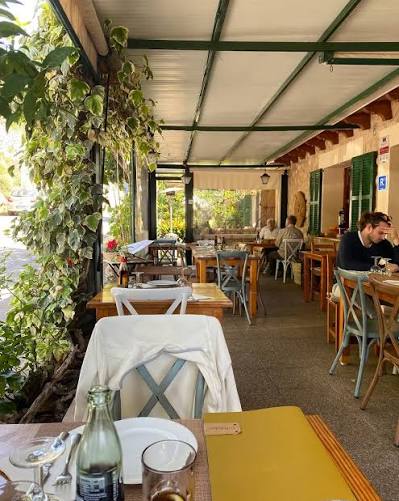
Ca n’Antuna
Fornalutx, A terrace hanging over the Sóller valley, arròs brut and roast suckling pig, enormous portions, honest prices. Closed Mondays; book for Sundays.
-
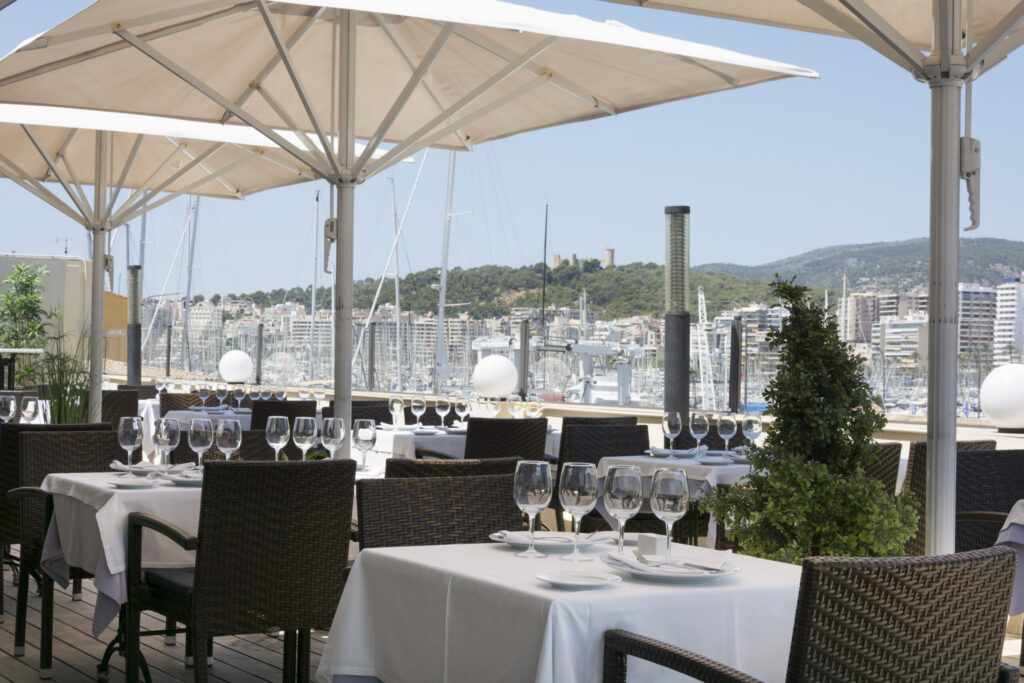
Ca n’Eduardo
Palma, Eighty years on the fishing quay with the cathedral across the water; lobster paella and fish straight off the auction. Closed Mondays.
-
-
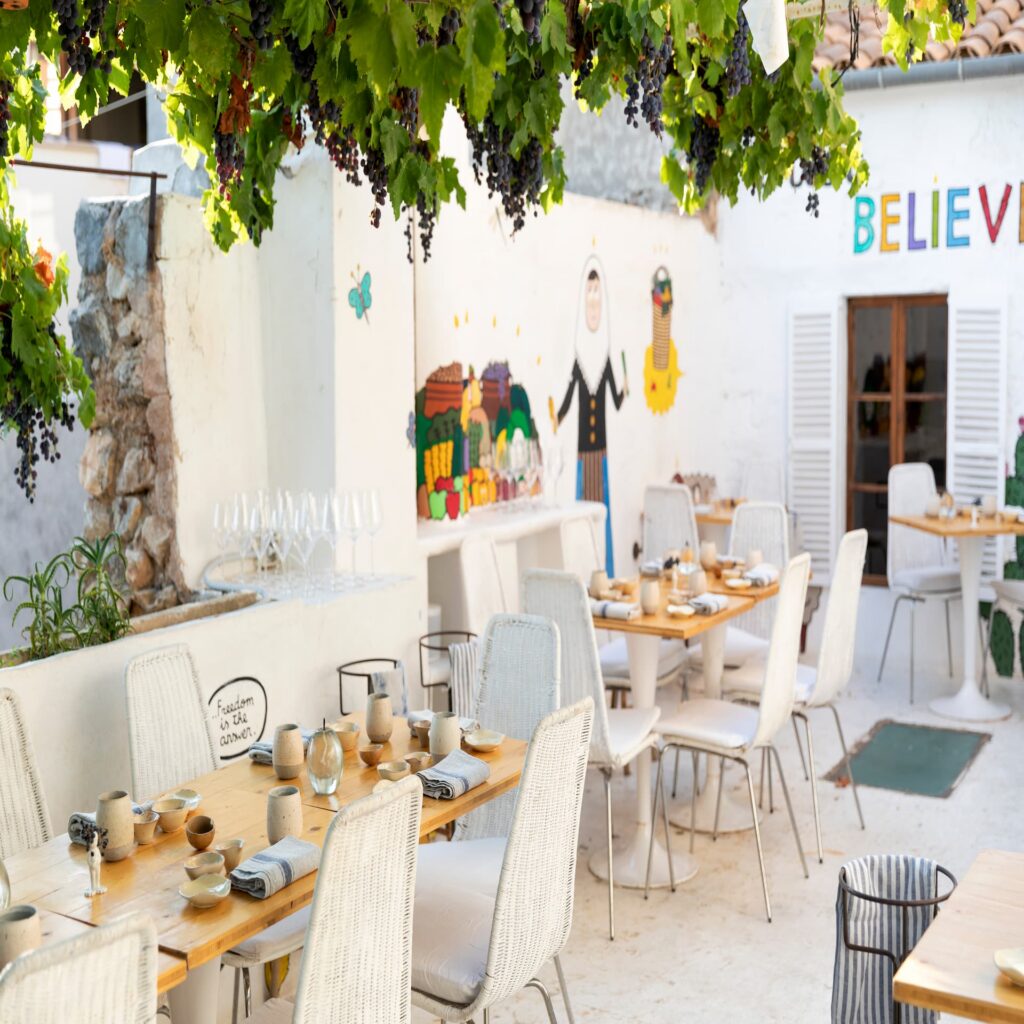
Ca Na Toneta
Caimari, Eight courses from the family’s own garden: the purest inland Mallorcan cooking on the island, and a Michelin Green Star rather than a star, which several guidebooks get wrong. Tiny; booking essential.
-
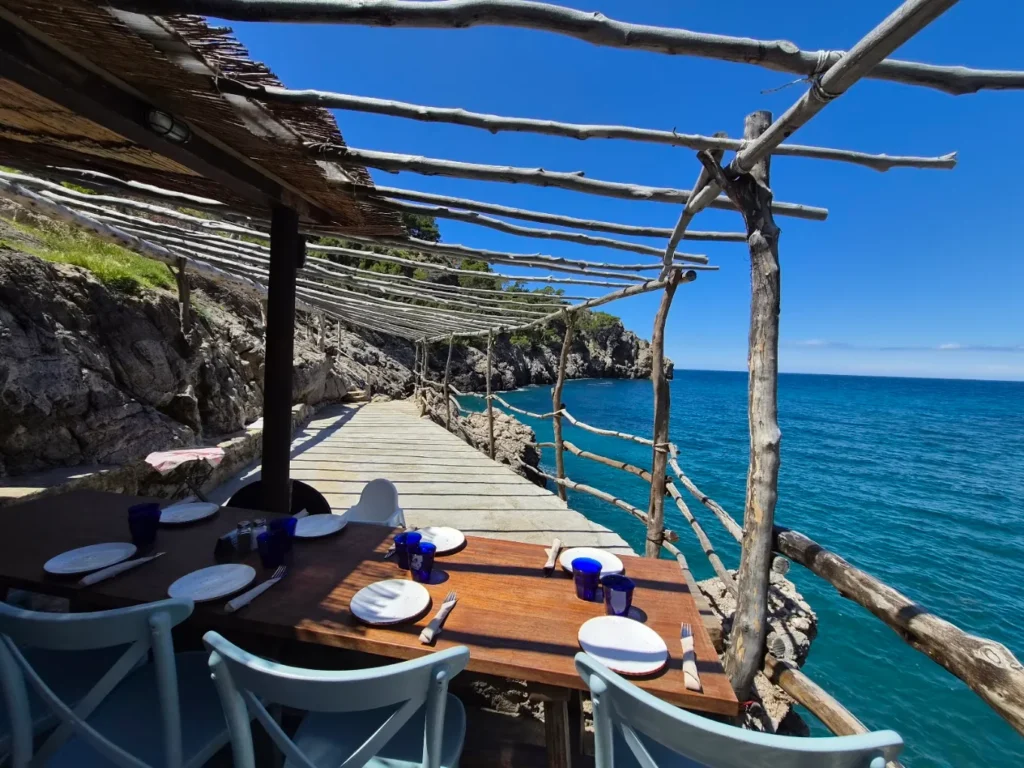
Ca’s Patró March
A fish shack on the rocks, made famous by The Night Manager. Bookings open only fifteen days ahead and go within minutes, and it is cash only with no cash machine nearby. Late spring to early autumn; dinner in July and August only.
-
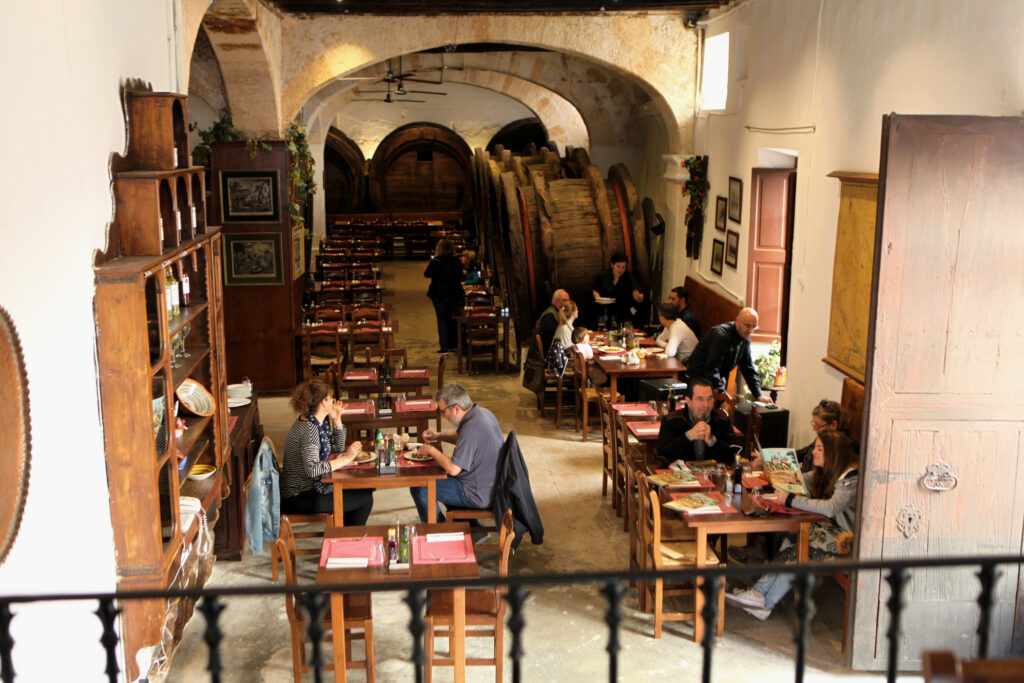
Celler Can Font or Celler Es Grop
Sineu, 28 min — Vaulted cellers, one twelfth-century and one five hundred years old, both with the barrels still in them. Pair either with the Wednesday market.
-
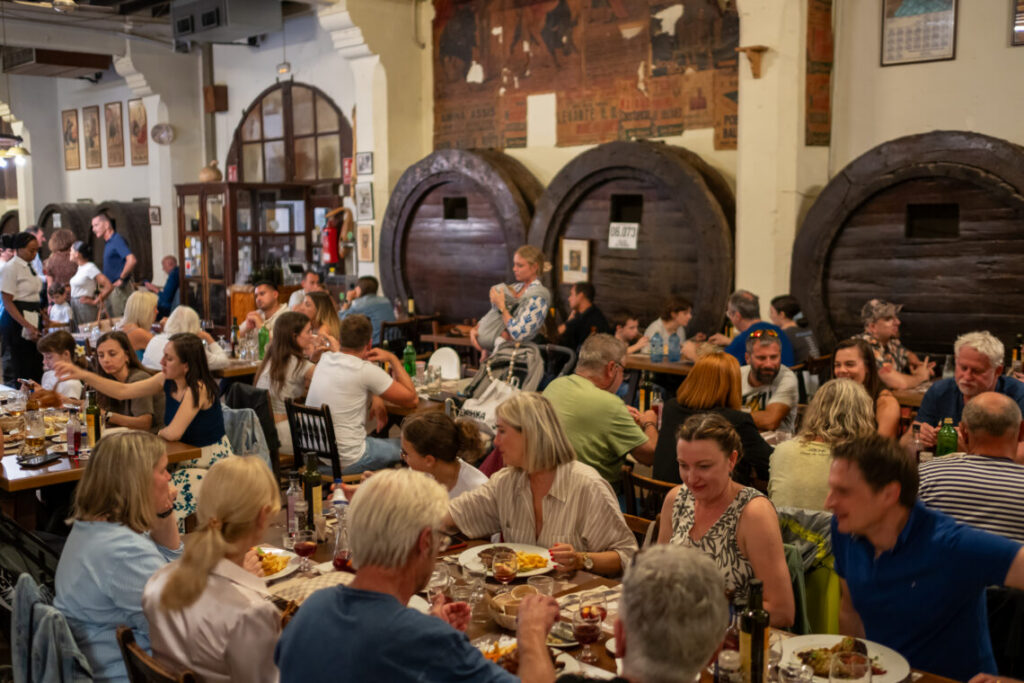
Celler Sa Premsa
Palma, Since 1958, a hall of giant wine barrels, sopes mallorquines and arròs brut. The classic Palma lunch. Closed Sundays.
-
-
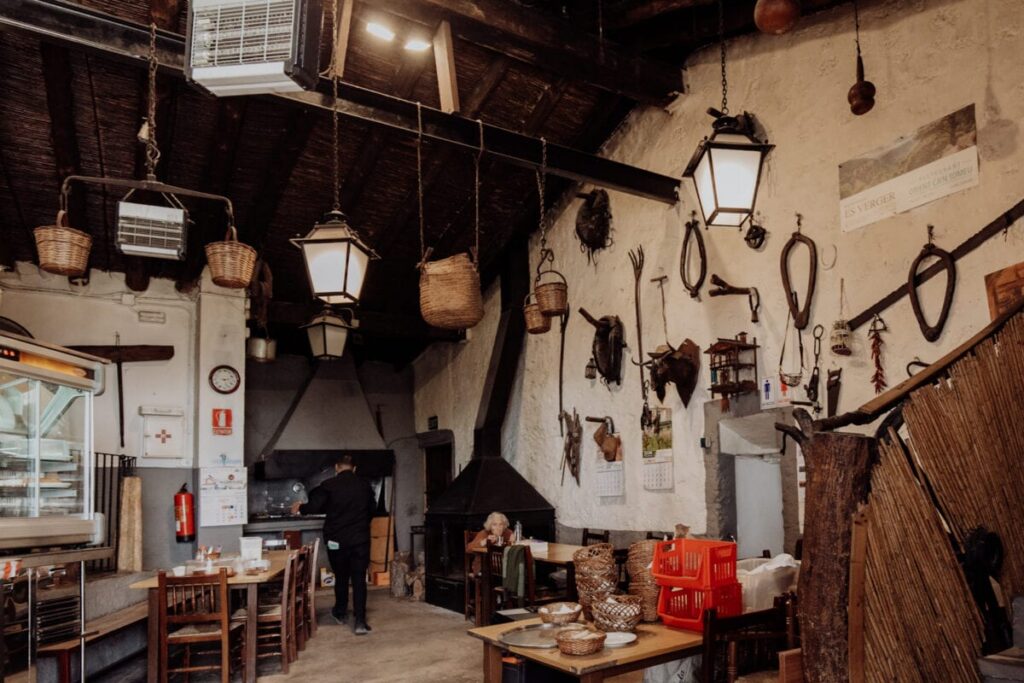
Es Verger
One wood oven, alight since dawn, and shoulder of lamb that has been in it for hours. Plain tables, goats, the whole Tramuntana in front of you. Usually closed Mondays, and the lamb runs out after two o’clock. The access track is single-track, unguarded and rough — it damages low cars.
-
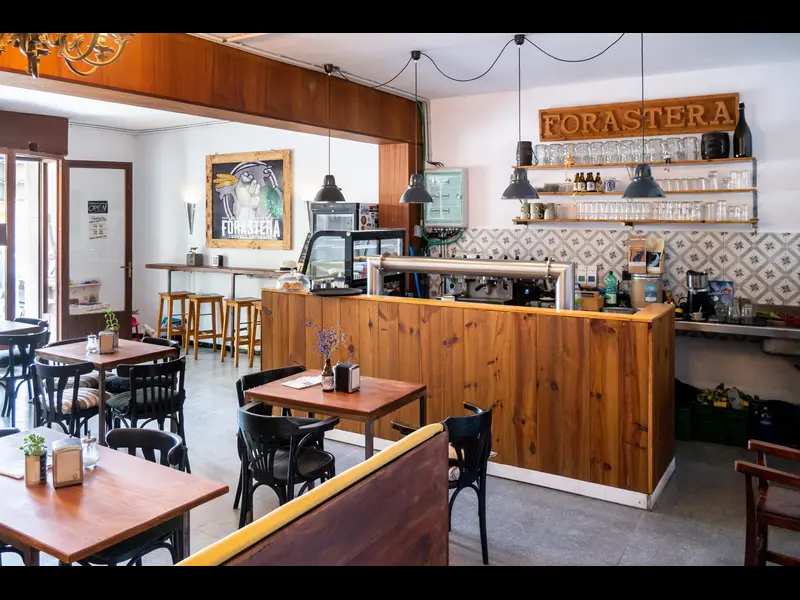
Forastera
A working microbrewery with a taproom. Closes for holidays roughly 23 August to 15 September.
-
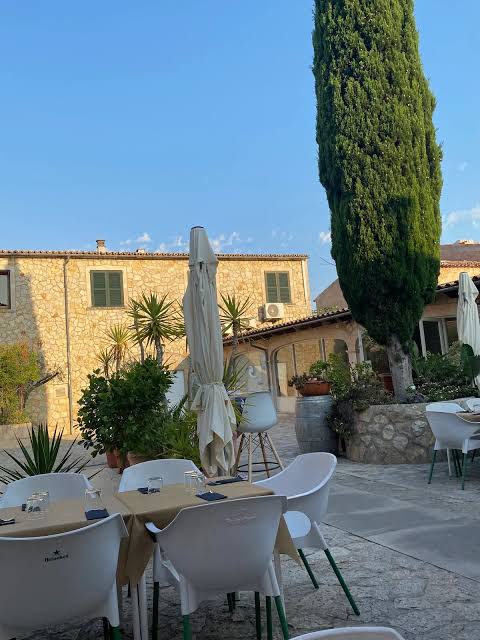
La Bufala
Neapolitan wood-fired pizza and handmade pasta, big terrace, good with children. Dinner only, closed Mondays.
-
La Isla del Gelato
Artisan gelato, crêpes and good coffee, open until midnight. Closed Tuesdays.
-
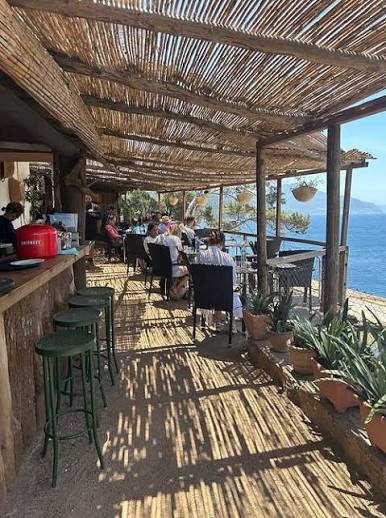
-
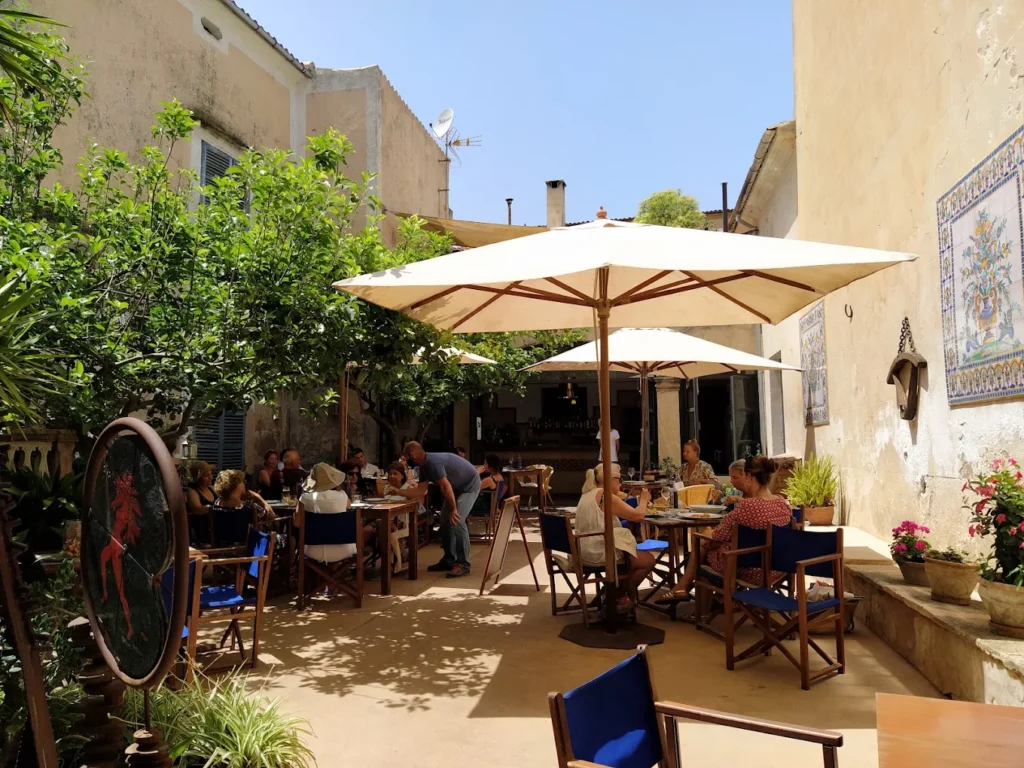
Sa Gripia
Artà, A hidden old-town courtyard, no printed menu: a blackboard explained at the table, and day-boat fish. Closed Sundays.
-
Cala Deià
45 min — Shingle and boulders, deep clear water, two restaurants. The access road closes when the small car park fills; four-hour maximum, ten to eight, April to October, and holders of a restaurant booking are exempt. Otherwise park in the village and walk down — twenty-five minutes, and steeper coming back.
-
Cala Llombards
1 h 08 — Better than its famous neighbour: proper sand between low cliffs, a seasonal beach bar, traditional boat huts, some shade, an easy walk down.
-
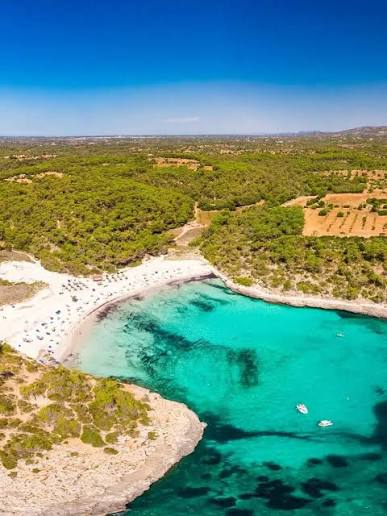
Cala Mondragó and S’Amarador
1 h 10 — Two linked sand coves in a natural park: pine-fringed, shallow, sheltered, with toilets, a beach bar and lifeguards. The best-balanced cove on the east coast — genuinely beautiful and it has facilities. Five to ten minutes’ flat walk in.
-
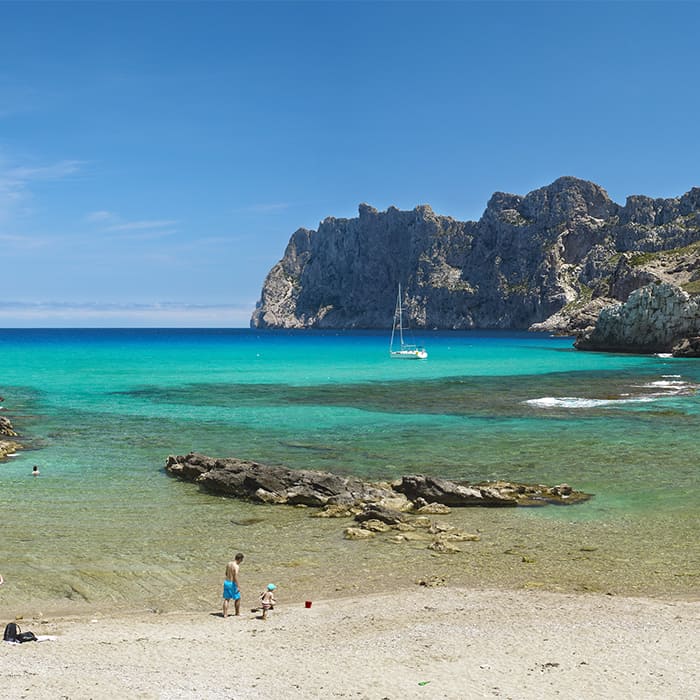
Cala Sant Vicenç
40 min — Four coves under the Cavall Bernat ridge. Cala Molins is the family one; Barques, Clara and Carbó are smaller with the clearest water and the best snorkelling. Parking is tight — before eleven.
-
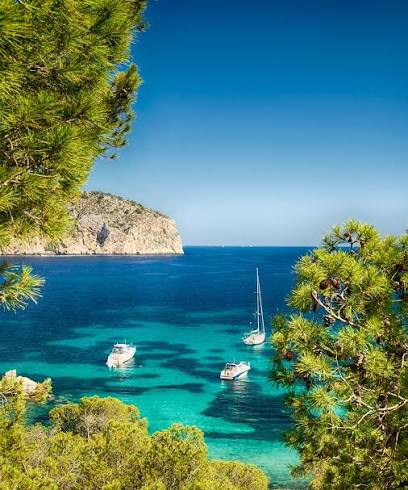
Cala Tuent
The quiet answer to Sa Calobra, and you turn off before the worst of the hairpins. Pebble and sand, one restaurant above it.
-
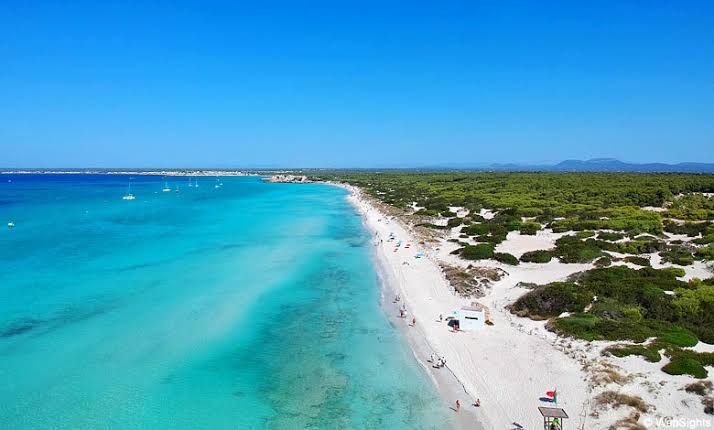
Es Trenc
1 h — See Top Excursions. No shade at all unless you take a sunbed and parasol. Be parked by half nine.
-
Platja d’en Repic, Port de Sóller
33 min — The best real family beach within thirty-five minutes: sheltered horseshoe bay, almost no waves, sand and fine gravel, lifeguard, ramps, sunbeds, restaurants behind and ample parking with no walk in. Reachable on the vintage tram, which is half the pleasure.
-
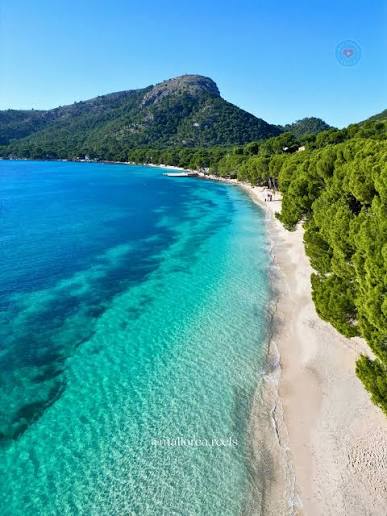
Platja de Formentor
50 min — Nine hundred metres of fine sand under mature pines: the rare Mallorcan beach with real natural shade, shallow, calm and genuinely first-rate for families. See Top Excursions for the 2026 car ban — arrive before ten, take the 334 shuttle, or come by boat.
-
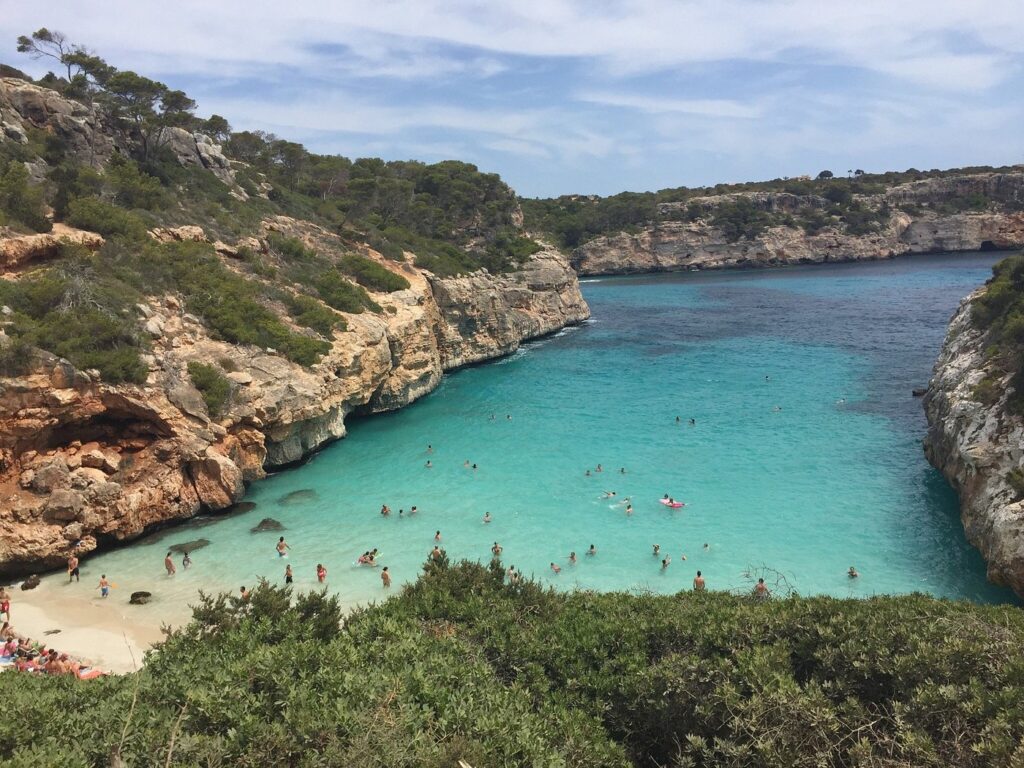
Platja de Muro
32 min — Five kilometres of pale sand, shallow water, dunes behind, full facilities. The most reliable easy day with small children, and the northern end by S’Albufera is much quieter.
-
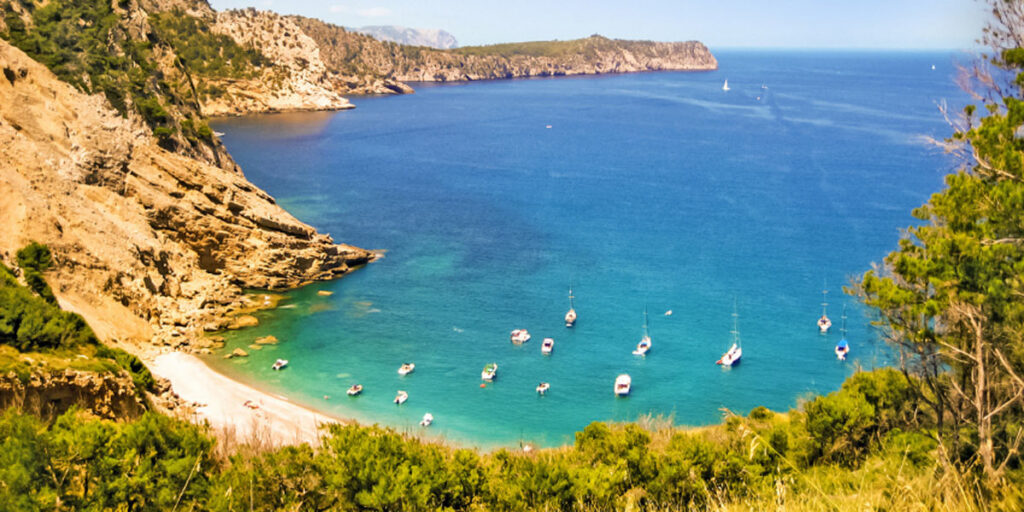
Platja des Coll Baix
The most spectacular swimming water in the north, and you earn it: 2.5 km of walking with a steep, loose, boulder-strewn final descent, thirty to forty-five minutes down and longer back. No shade, no water, no lifeguard, patchy signal. Never crowded even in August.
-
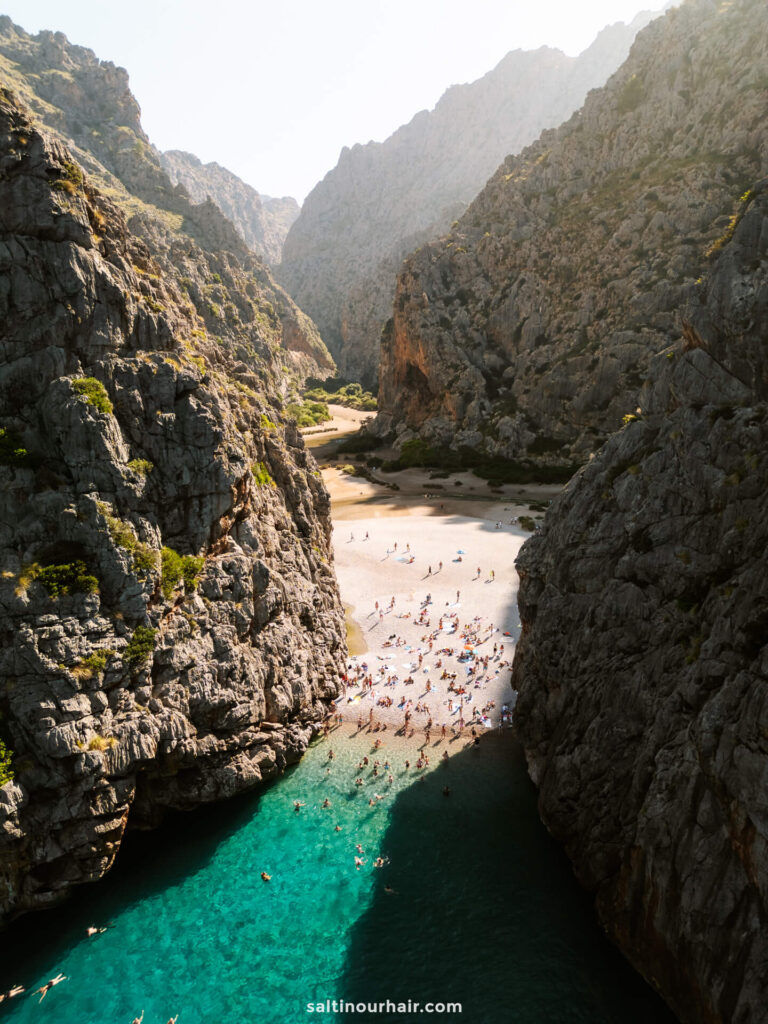
Sa Calobra
1 h 15–1 h 30 — A pebble strand at the mouth of the gorge, through lit tunnels on foot. Dramatic rather than restful, and full of coach parties between eleven and two. Go by boat from Port de Sóller instead — €35 return, four sailings a day from April to October.
-
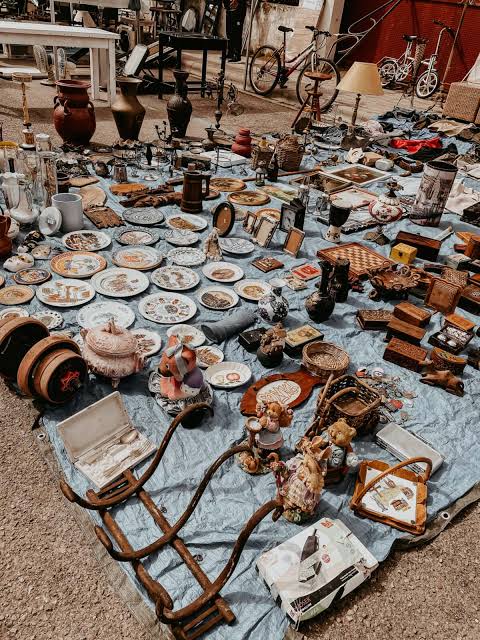
Consell on a Sunday
8 min — The island’s biggest flea market. Consell also holds a general market on Thursdays.
-
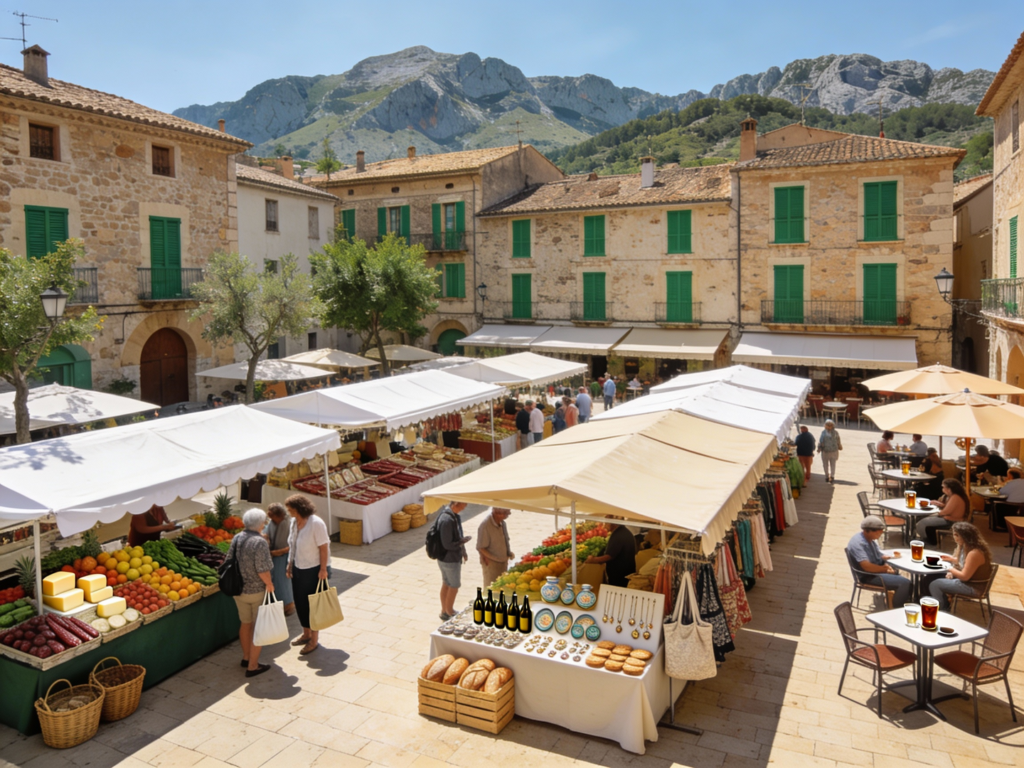
Saturday market, Plaça de la Vila
Out of the front door — Eight until two. Thirty stalls, produce, plants and Mallorcan crafts. Small, entirely local, no coaches.
-
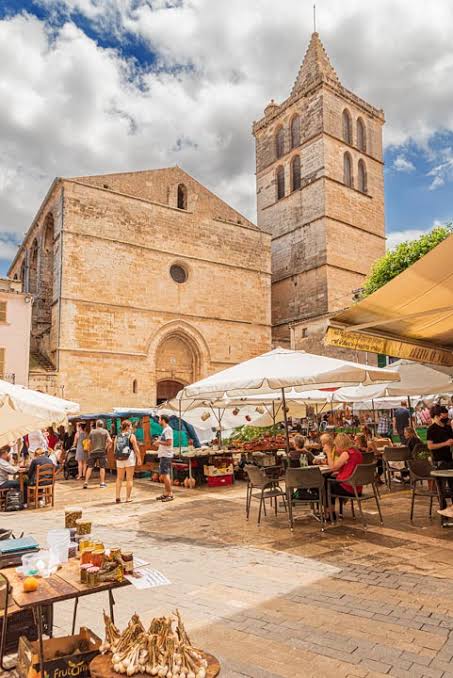
Sineu on a Wednesday
28 min — Chartered in 1306 and still the oldest market on the island, with the only surviving live-animal section in Mallorca. Between half eight and ten, then breakfast in the old station.
-
Tony Mora
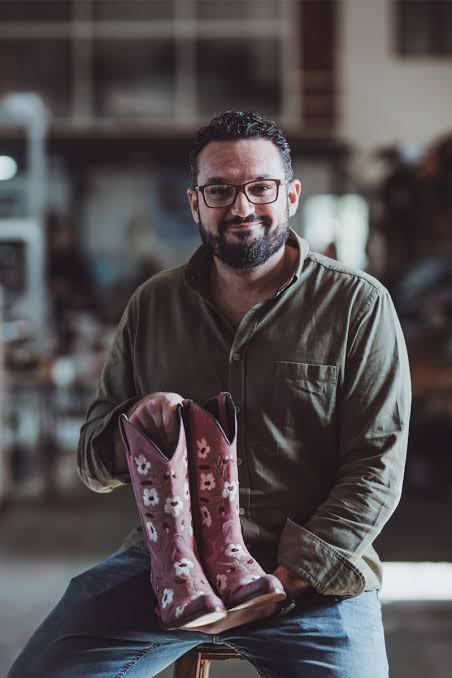
7 min, on the Consell road — A hundred-year-old bootmaker, the survivor of a leather trade that once ran to thirty factories and two thousand people in this village. Sixty pieces of leather in a pair, over a hundred steps, Goodyear welted, a week per pair, and a lifetime guarantee. Monday to Friday ten to seven, Saturday morning. They take measurements for bespoke and post the boots home.
-
Bellver Castle
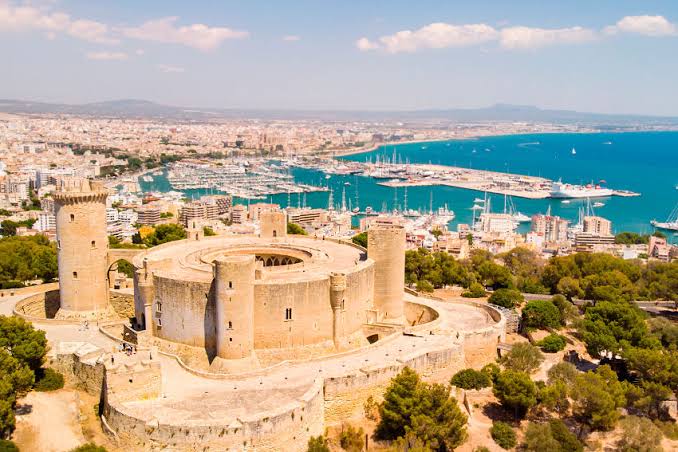
30 min — The only circular Gothic castle in Europe, 112 m above the city in pine woods.
-
Can Balaguer
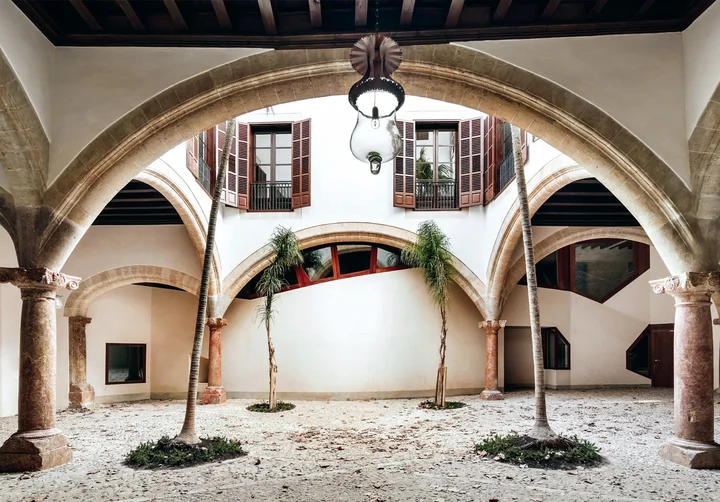
30 min — The best free half-hour in Palma: an eighteenth-century townhouse with its original furniture and one of the finest courtyards in the city.
-
Castell de Capdepera
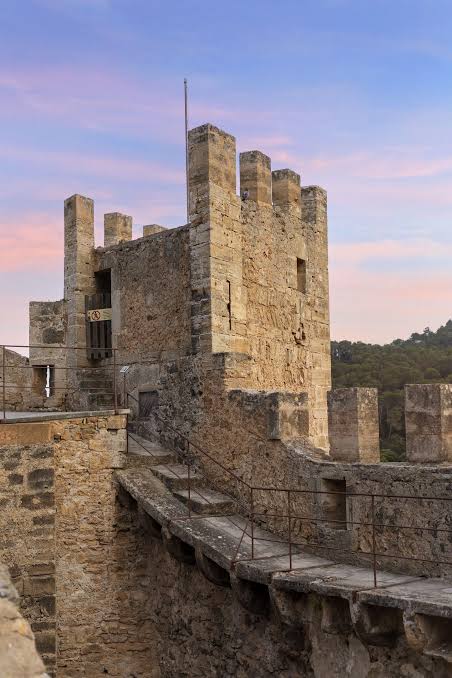
1 h 05 — A complete fourteenth-century walled hill town built to gather a scattered population against corsairs, and you walk the ramparts the whole way round.
-
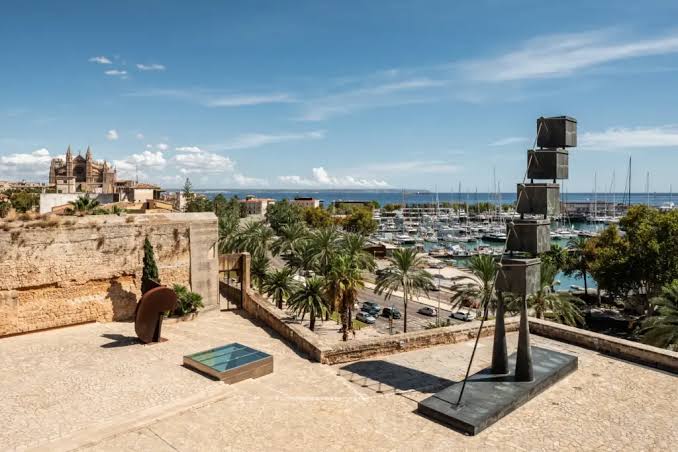
Es Baluard
30 min — Modern and contemporary art built into the Renaissance sea wall: Miró, Picasso, Barceló.
-
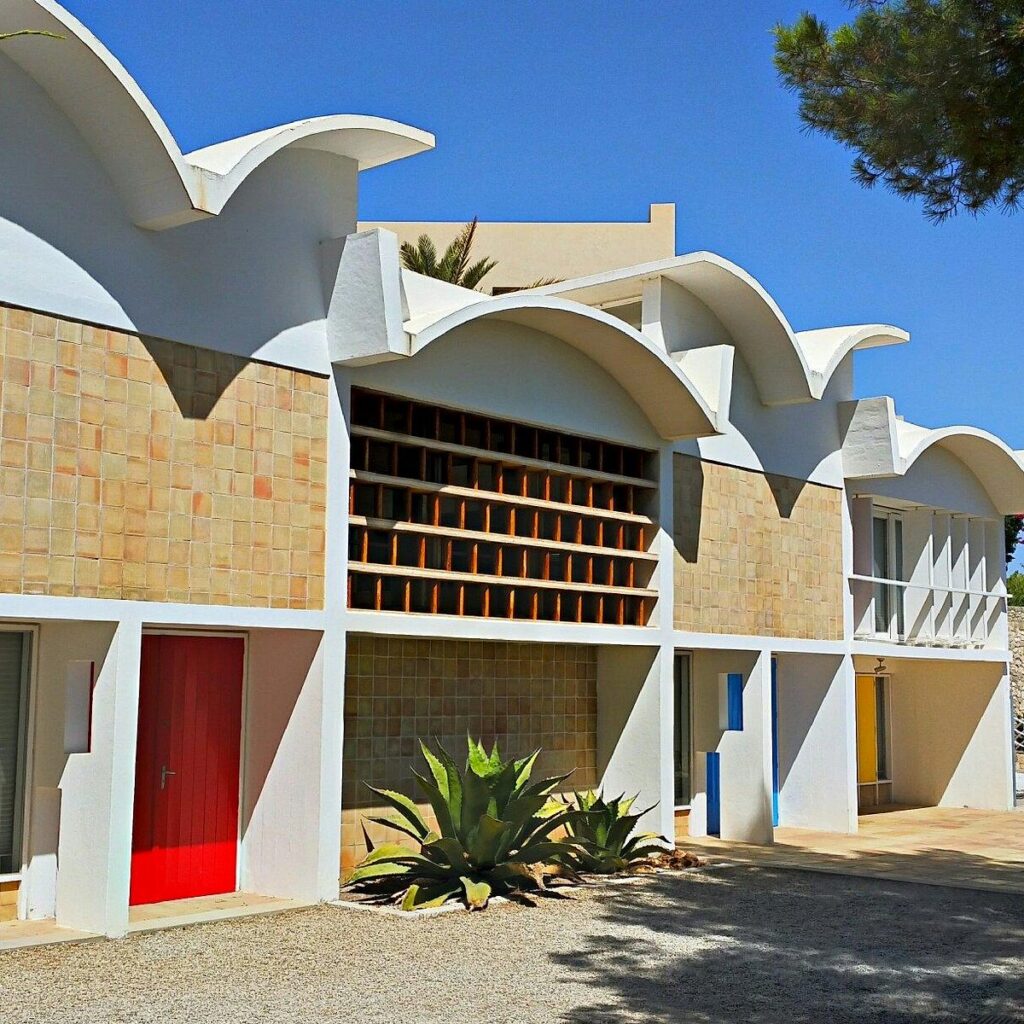
Fundació Miró
30 min — His own studios kept as he left them, with charcoal drawings straight onto the walls of the farmhouse.
-
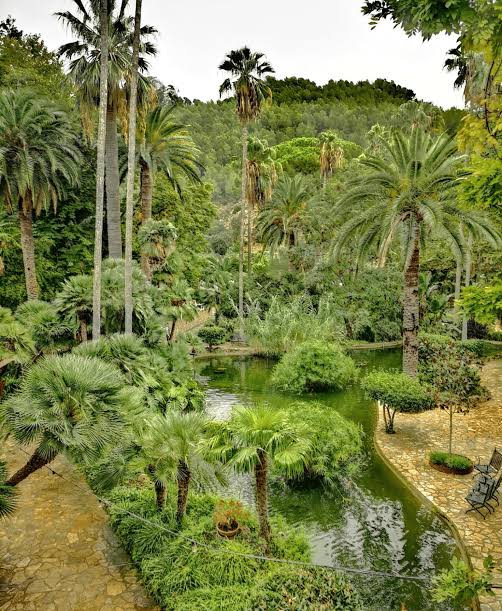
Jardins d’Alfàbia
20 min — A Moorish irrigation garden laid out on the qanat system by a thirteenth-century vizier, with a Mudéjar coffered ceiling in the house and a bamboo pergola full of hidden water jets. The most convenient outing from Alaró.
-
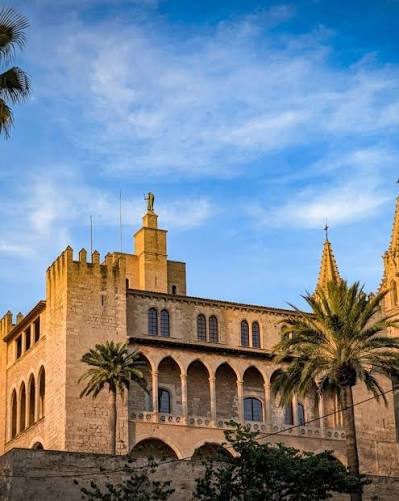
La Almudaina
30 min — A Moorish alcázar remodelled into a Gothic royal palace, still an official royal residence. Closed Mondays; free for EU citizens Wednesday and Sunday afternoons, which is also when it is busiest.
-
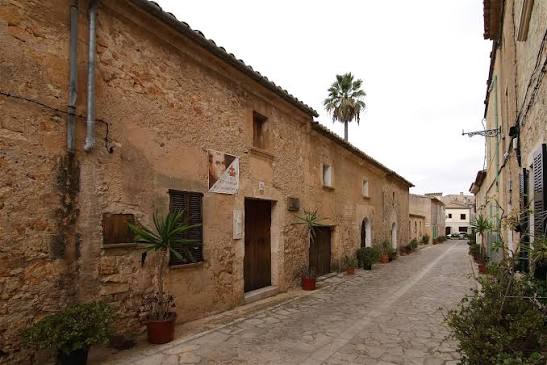
Petra and the Junípero Serra museum
35 min — The birthplace of the Franciscan who founded the California missions from San Diego to San Francisco.
-
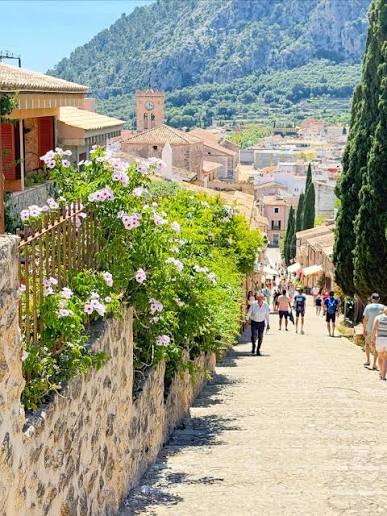
Pollença — the Calvari steps
40 min — 365 cypress-flanked steps to an eighteenth-century chapel. Free, always open. The Good Friday torchlit descent is the most affecting religious event on the island. Note that the Pont Romà is Roman by tradition rather than by evidence — most likely medieval on a Roman line.
-
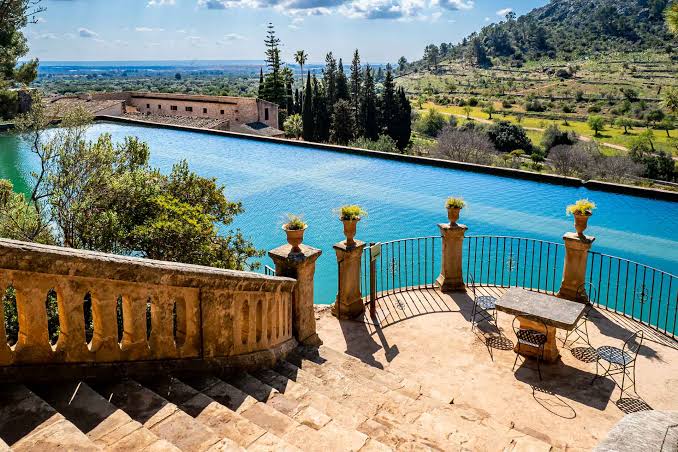
Raixa
18 min — The neoclassical garden estate remodelled by Cardinal Despuig from 1776: the orange garden, the monumental Apollo staircase, a belvedere. Five minutes from Alfàbia — do both.
-
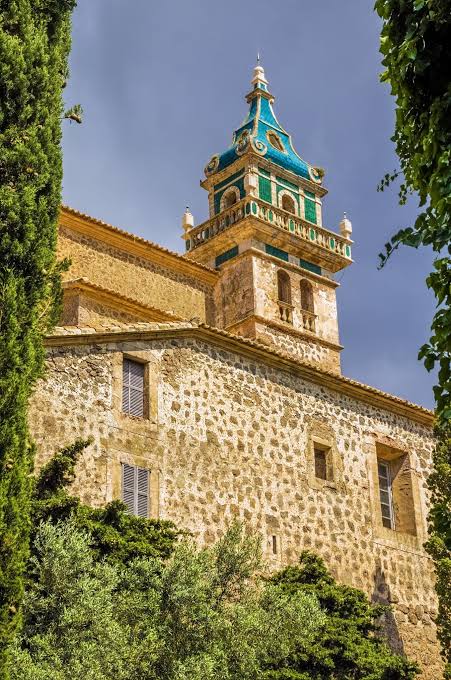
Real Cartuja de Valldemossa
40 min — See Top Excursions. €11, including short piano recitals through the day.
-
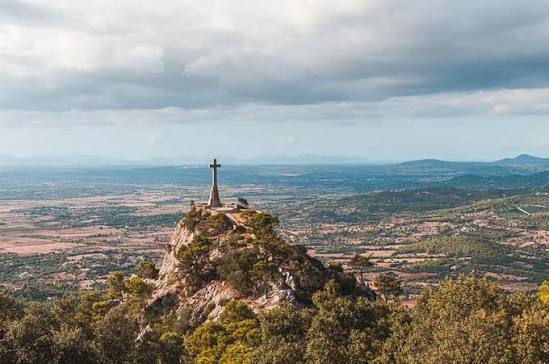
Santuari de Cura, Puig de Randa
40 min — The only free-standing mesa on the plain, where Ramon Llull retreated around 1275. Free, with a restaurant and a 360-degree view of the whole island from Palma bay to Alcúdia. Ask at the restaurant for the key to Llull’s meditation cave. Late afternoon into sunset.
-
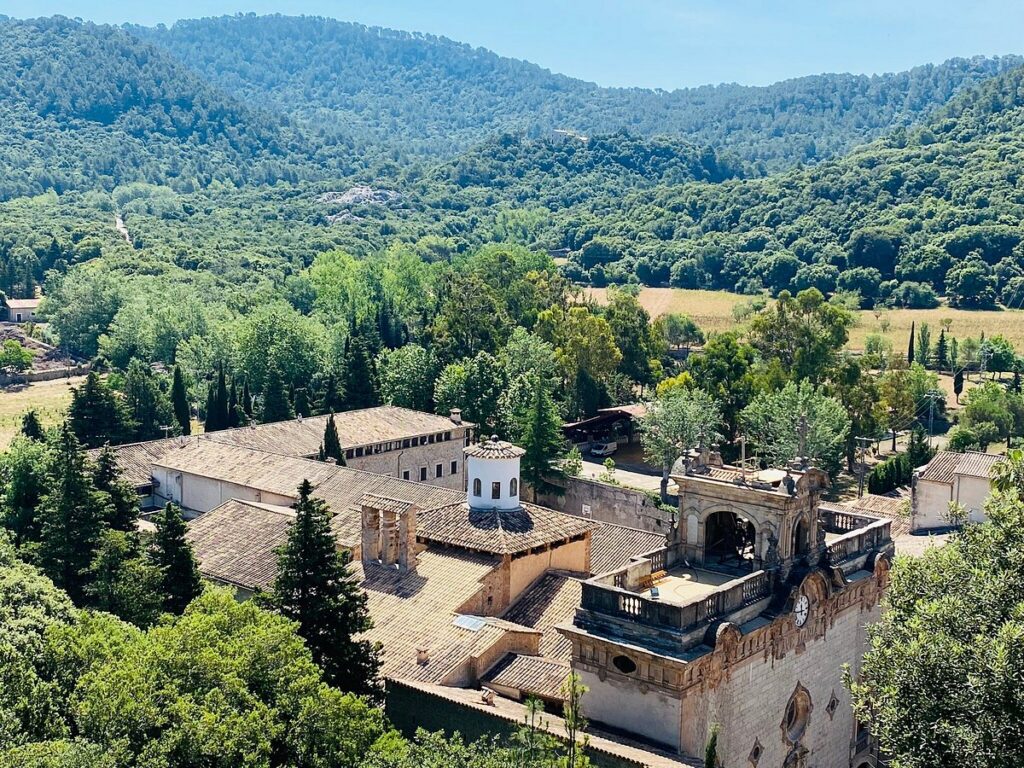
Santuari de Lluc
45 min — The island’s spiritual centre since a shepherd boy found the dark stone Virgin here around 1250.
-
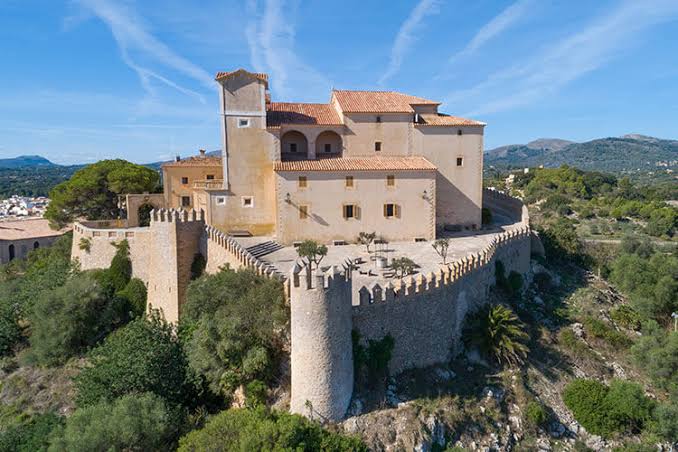
Santuari de Sant Salvador, Artà
55 min — A Moorish-origin fortified enclosure with metre-thick walls and seven watchtowers, up 180 cypress-lined steps from the parish church.
-
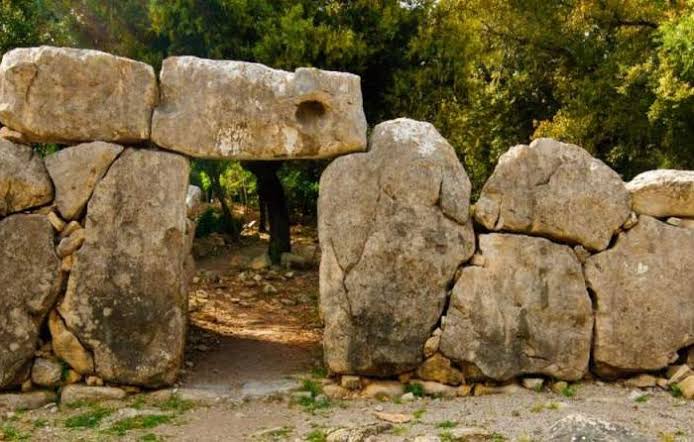
Ses Païsses, Artà
55 min — One of the best-preserved Talayotic settlements on the island, around 850 BC: a 374-metre cyclopean wall and a monumental trilithic gateway.
-
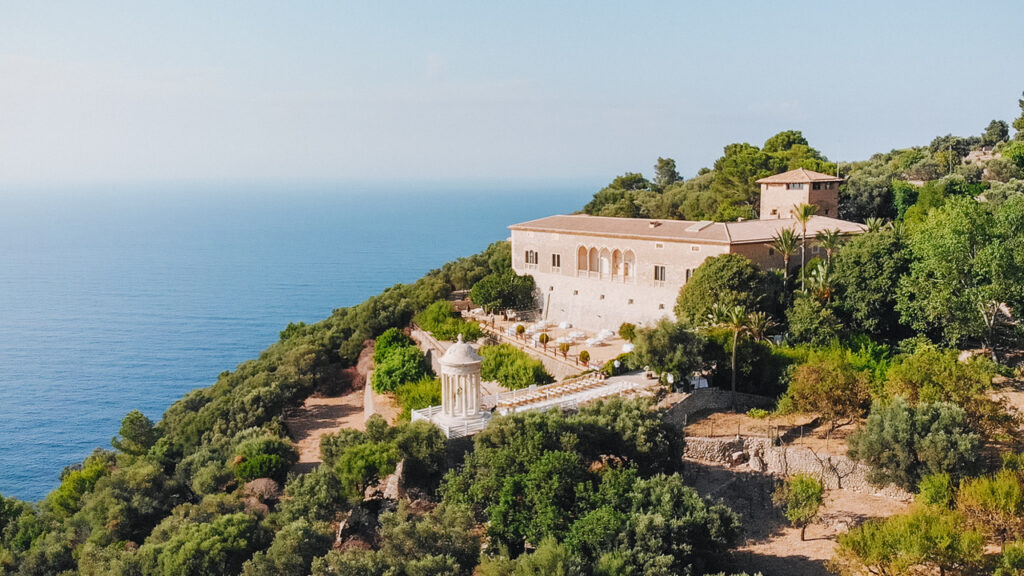
Son Marroig
55 min — The estate of Archduke Ludwig Salvator, the Habsburg who mapped and wrote this coast and effectively invented Mallorcan conservation by refusing to build on his own land. A Carrara marble mirador on the cliff edge looking straight at Sa Foradada.
-
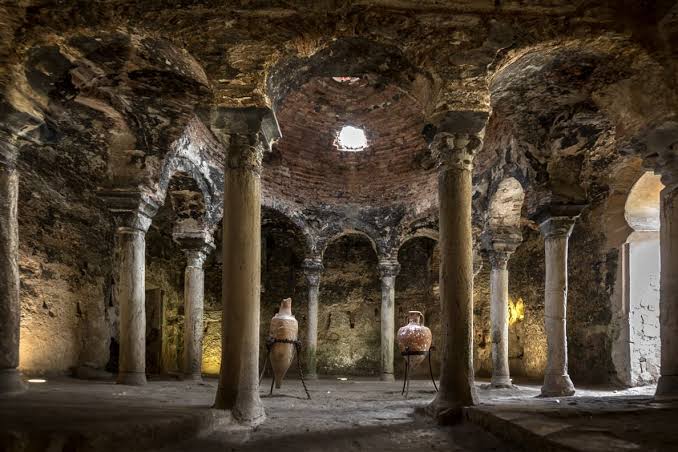
The Arab Baths
30 min — A tenth-century hammam dome on twelve reused columns, each capital different, and a walled orange garden.
-
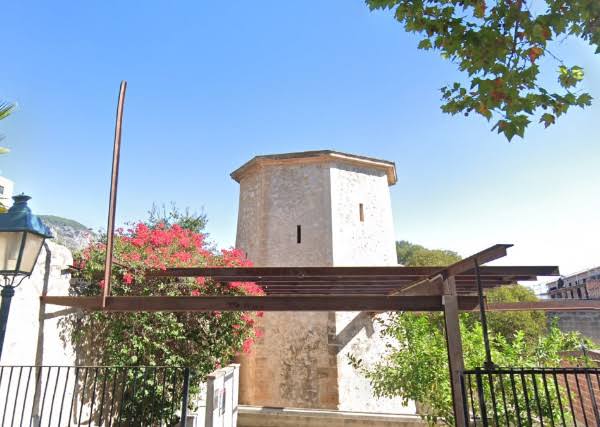
The first electric light in Mallorca
On foot — On 15 August 1901, for the patronal fiestas, the brothers Gaspar and Josep Perelló Pol switched on a generating station they had built with their own money, fired by lignite from the Alaró mines, and lit the village before Palma. Crowds came out from the city to look at it. The power station tower still stands at Avinguda Constitució 7, three minutes from the front door.